
Last updated September 10, 2026
Full 25-point door and opener safety check with every visit - springs, cables, rollers, tracks, and your LiftMaster or Chamberlain opener included
You get a price before we start. It does not change when the truck arrives.
 Before
 After
After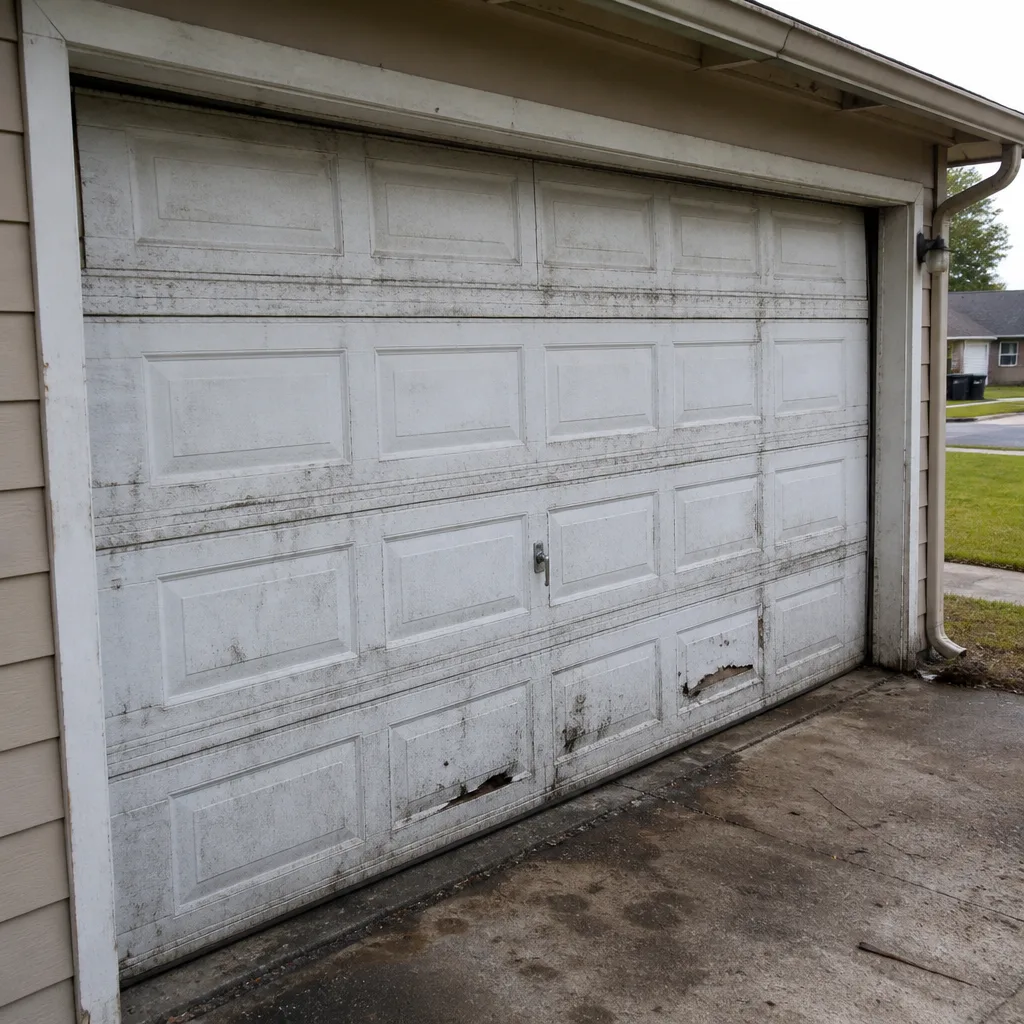 Before
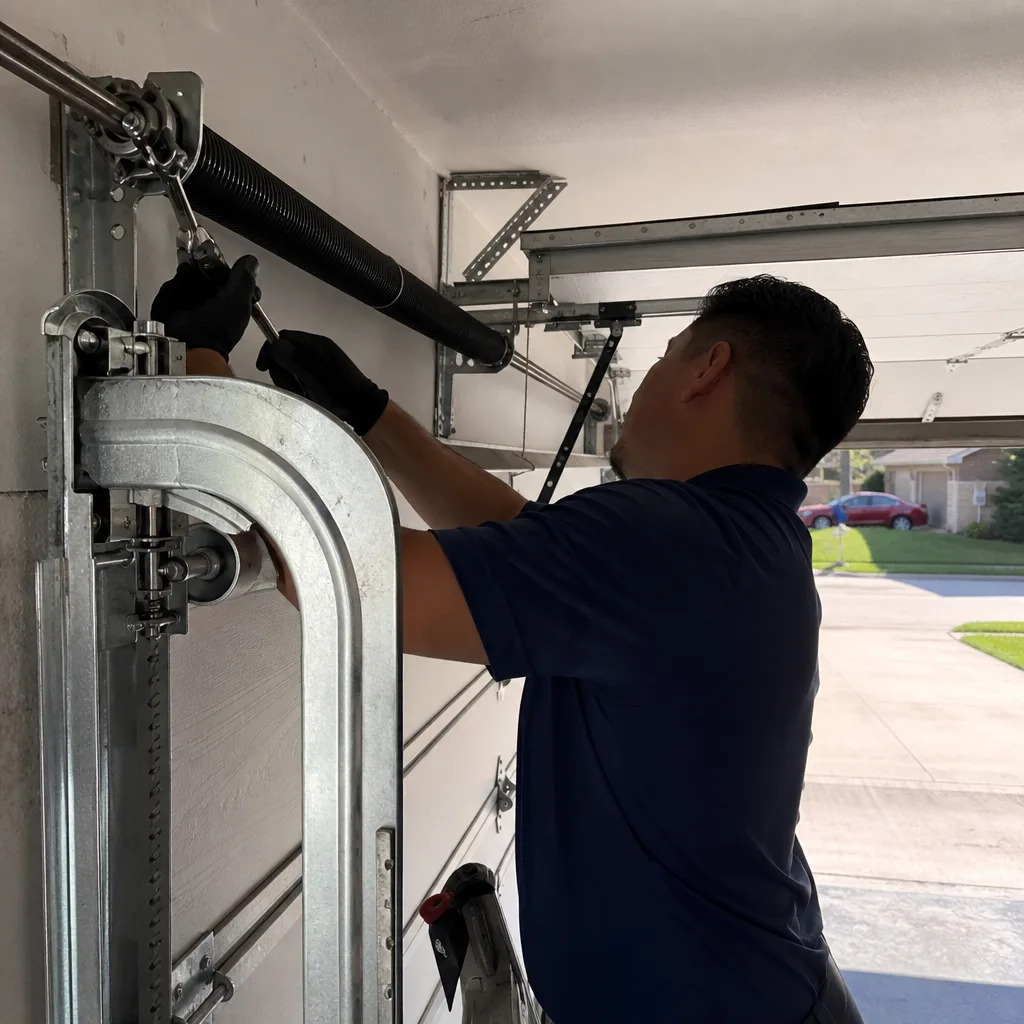 After
After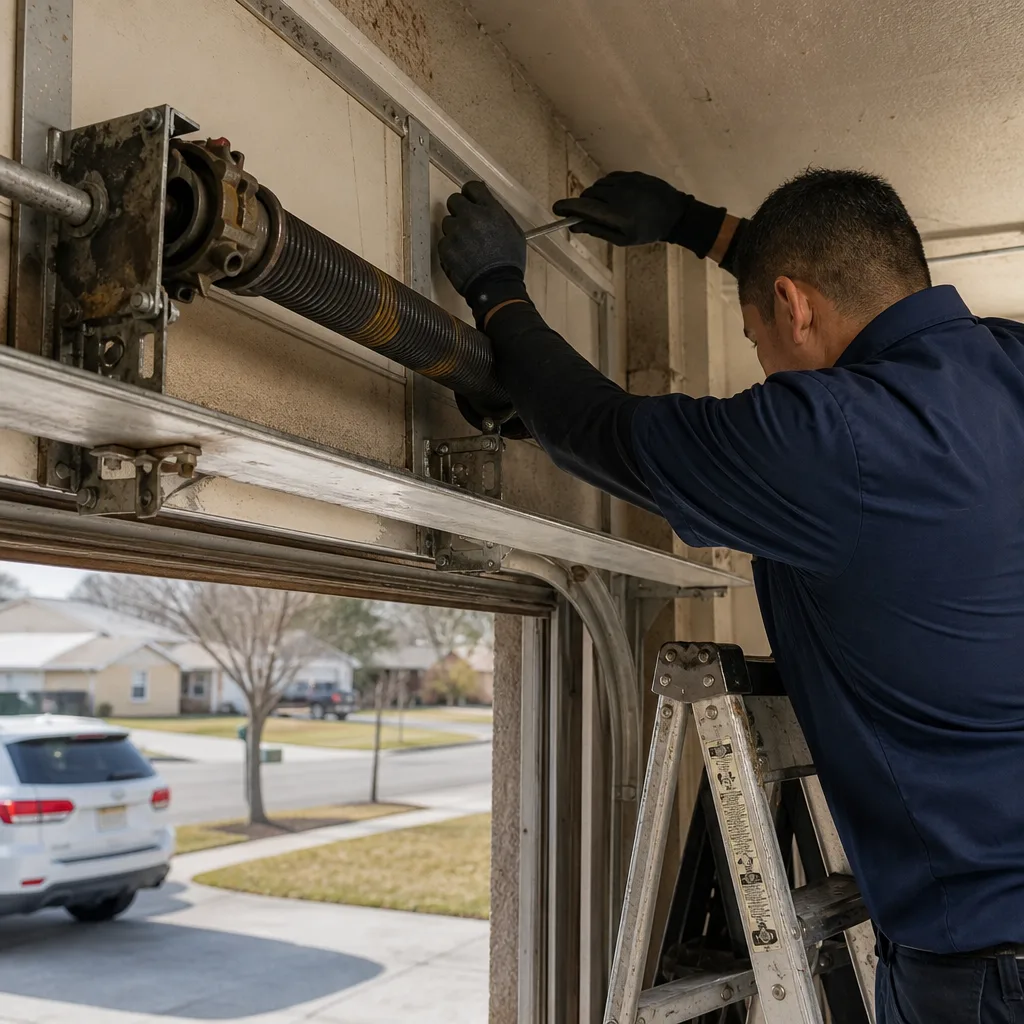 Before
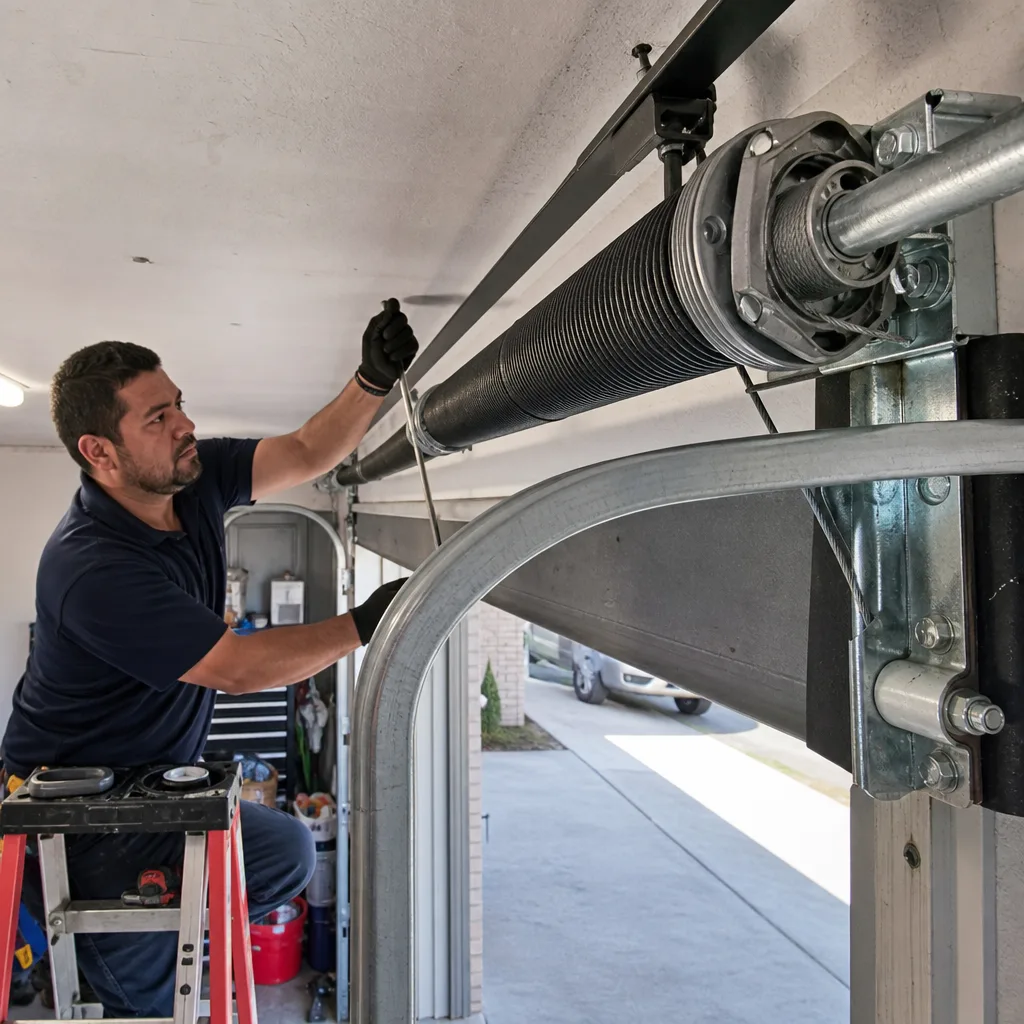 After
AfterGarage Door Repair Maintenance Checklist for Baytown Homeowners
Most maintenance checklists are written for dry climates and list tasks in the wrong order. In Baytown, the single task that prevents 60 percent of emergency service calls - lubricating the torsion spring shaft - appears last, if it appears at all. The Gulf Coast humidity, seasonal flooding, and constant road vibration from refinery traffic create failure modes that generic checklists never address. This guide reorders every task by actual risk in Baytown conditions, names the exact lubricants that resist our coastal air, and flags which tasks protect your warranty and which ones void it.
Quick Answer
Baytown homeowners should inspect and lubricate the torsion spring shaft quarterly, check bottom seals after heavy rain seasons, and test auto-reverse safety features monthly. Use silicone-based lubricants rated for high humidity, never WD-40 on moving parts. Most critical: leave spring, cable, and tension adjustments to a trained technician - these components carry lethal force. For anything beyond basic maintenance, our Garage Door Repair team handles the dangerous work safely.
Table of Contents
- Priority-Ranked Maintenance Tasks for Baytown’s Climate
- The Exact Lubricants That Survive Gulf Coast Humidity
- How to Check Your Bottom Seal After Heavy Rain Seasons
- Reading Rust on Steel Doors: Early Warning Signs
- What Resets Your Warranty Clock (and What Voids It)
- Monthly Safety Checks Every Homeowner Can Do
- Seasonal Deep Maintenance Schedule
- Common Mistakes to Avoid
- When to Call a Professional
- Frequently Asked Questions
- The Bottom Line
Priority-Ranked Maintenance Tasks for Baytown’s Climate
Generic checklists start with visual inspection and end with lubrication. We have done this work in Baytown for over four decades, and that order gets homeowners into trouble. Here is how the failures actually arrive, ranked by frequency and consequence.
1. Lubricate the Torsion Spring Shaft
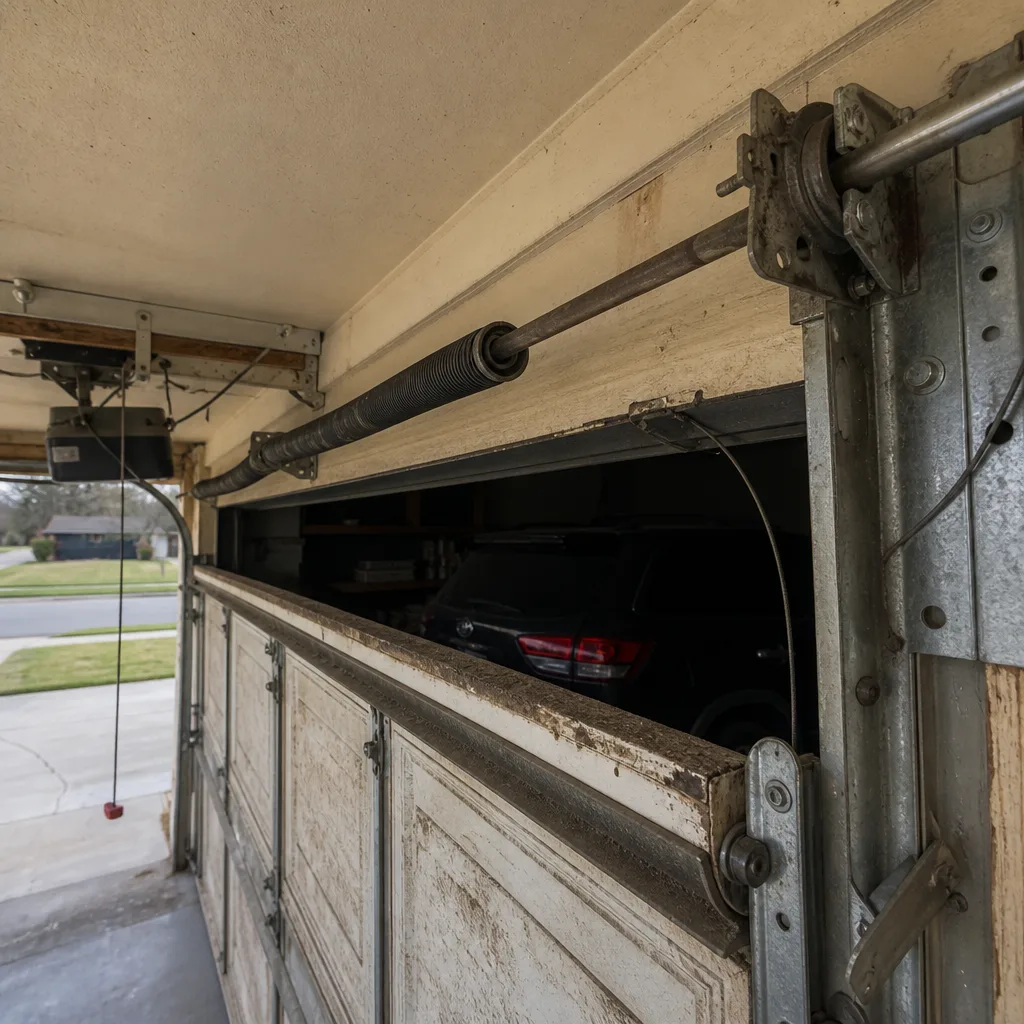
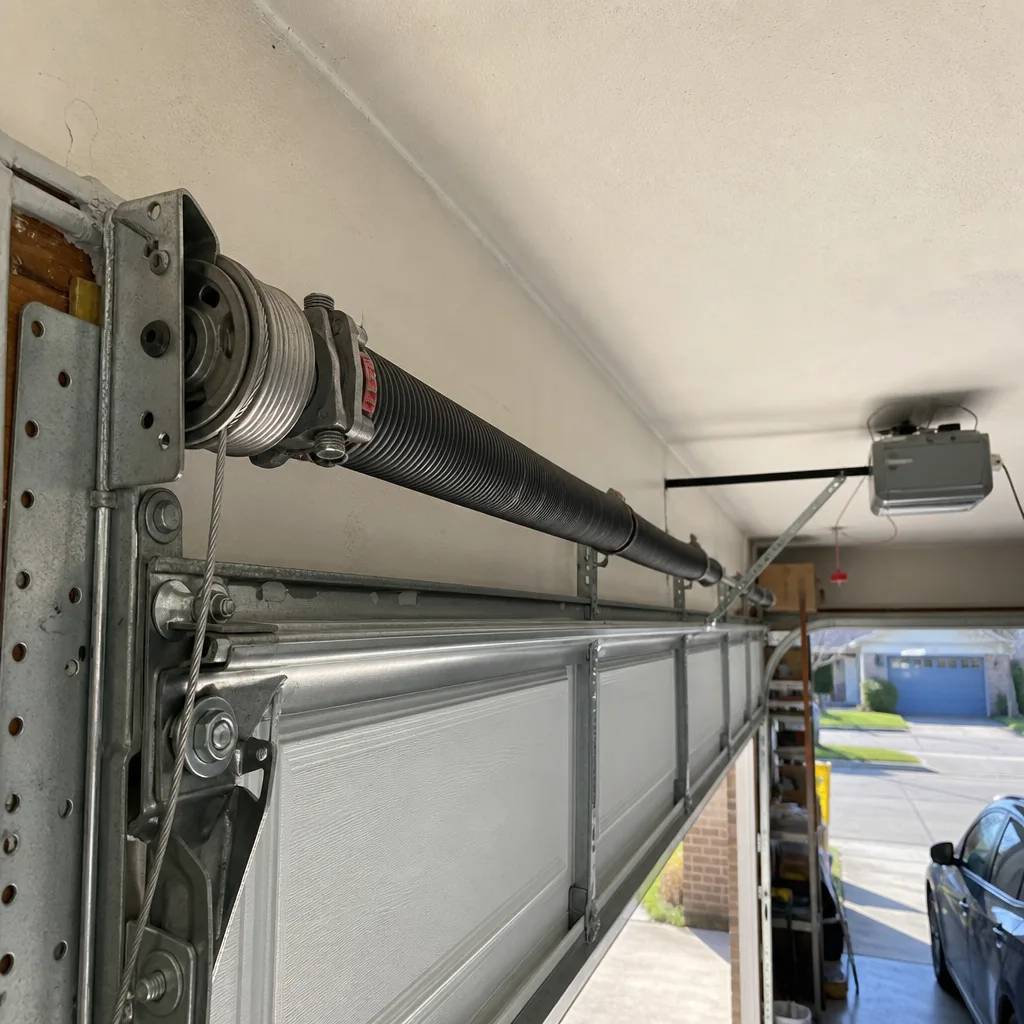
This is the task that prevents most emergency calls. The torsion spring shaft sits horizontally above your door, and in Baytown’s humid air, it rusts from the inside out. Once corrosion binds the shaft to the bearing plates, the spring cannot unwind smoothly. The opener strains, cables slip, and you are looking at a full spring replacement instead of a ten-minute maintenance stop.
We see this failure pattern constantly in neighborhoods near the ship channel and along Texas Avenue, where salt air accelerates corrosion. The shaft does not look bad from the outside. It feels rough when you rotate it by hand with the door down and the opener disconnected. That roughness is the beginning of the end.
Do this quarterly. Disconnect the opener, raise the door halfway, and lock it with locking pliers on the track. Apply a thin film of white lithium grease or a silicone-based garage door lubricant directly to the shaft where it passes through the end bearings. Rotate the door manually to spread the lubricant. Wipe excess - in Baytown humidity, pooled lubricant traps moisture.
2. Inspect and Replace Bottom Seals
Baytown’s clay-heavy soil swells and shrinks dramatically after wet seasons. In the Sterling Lakes and Cedar Bayou areas, we have watched garage slabs settle unevenly, leaving gaps under the door that standard seals cannot close. Water enters, rusts the bottom section from the inside, and damages anything stored nearby.
Check your seal after every heavy rain period. Look for compression set - the seal stays flattened instead of rebounding. Look for gaps at the corners, where settlement shows first. If you can slide a business card under the seal anywhere, replace it.
3. Tighten Hardware Against Vibration
The refinery traffic on Interstate 10 and Highway 146 sends low-frequency vibration through Baytown’s older neighborhoods. Over months, roller brackets, hinge screws, and track bolts loosen. A loose roller bracket causes the door to wobble in the track. Wobble wears rollers, damages sections, and eventually throws the door off its tracks entirely.
Run a socket wrench over every bolt and lag screw annually. Do not overtighten - strip a track bolt and you are drilling and re-tapping. Snug is the word.
4. Test Auto-Reverse and Photo-Eye Alignment
Federal law requires these features, but humidity fogs photo-eyes and salt air corrodes their housings. Monthly testing is not excessive in Baytown. Place a 2×4 flat on the floor centered under the door. The door must reverse on contact. Wave a broom handle through the photo-eye beam during descent. The door must reverse immediately.
If either test fails, clean the lenses with a dry cloth first. Baytown’s pollen seasons coat everything. If cleaning does not restore function, call for service - photo-eye wiring degrades in our humidity, and the fix is not a homeowner task. Learn to spot bigger problems early in our Garage Door Warning Signs: A Baytown Homeowner’s Reference Guide.
5. Inspect Cables for Fraying and Corrosion
The lift cables run alongside your door, looped around drums at the top. In coastal humidity, they rust from the inside, where you cannot see. Fraying shows first at the bottom loop, where the cable wraps around the bottom bracket. Look for broken strands, rust staining, or any change in cable diameter.
Never touch a cable under tension. If you see damage, stop using the door and call a professional. Cable failure under load causes the door to drop freely, and a 150-pound steel section does not stop for flesh.
The Exact Lubricants That Survive Gulf Coast Humidity
Walk into any Baytown hardware store and you will find a wall of lubricants. Most are wrong for this climate. The wrong choice attracts grit, traps moisture, or dries to a sticky film that collects pollen and salt residue.
Here is what works and what does not.
| Component | Use This | Never Use This | Why |
|---|---|---|---|
| Torsion spring shaft, bearings | White lithium grease or silicone-based garage door lube | WD-40, 3-in-1 oil | WD-40 displaces water but leaves no protective film; it evaporates and invites rust. 3-in-1 oil gums in humidity. |
| Roller stems, hinges | Silicone spray with Teflon | Graphite powder | Graphite works in dry climates but cakes with moisture. Silicone repels water and stays fluid. |
| Chain or screw drive opener | Manufacturer-specified lubricant | General-purpose grease | LiftMaster and Chamberlain specify their own compounds for a reason. Wrong lube voids opener warranties. |
| Track interior | Clean, dry cloth only | Any lubricant | Lubricated tracks collect grit and cause rollers to slip. The track guides; it does not need lubrication. |
Apply lubricants sparingly. In Baytown, excess lubricant is worse than none. It pools, traps humidity, and becomes a paste that accelerates wear. A light film you can barely see is correct.
We stock the correct lubricants on our trucks and apply them as part of every garage door repair in Baytown. If you are doing this yourself, buy from a garage door supplier, not a general hardware aisle. The $3 can of all-purpose spray costs more in the long run.
How to Check Your Bottom Seal After Heavy Rain Seasons
Baytown’s rain patterns are not gentle. When tropical systems stall or spring storms train across the region, the ground saturates and the clay soil expands. Then it dries, contracts, and your garage slab moves. The bottom seal, designed for a flat threshold, ends up bridging gaps or compressed into humps.
Here is the inspection sequence we use after every major wet season in the Baytown market.
- Close the door fully. Turn off the garage lights and look for daylight under the seal. Any visible line of light is a gap. Mark the location with masking tape.
- Run a garden hose lightly at the threshold for two minutes. Check inside for moisture. Water entry stains the concrete and rusts the bottom of steel doors from the interior face, where paint does not protect.
- Inspect the seal itself. Look for cracking, permanent flattening, or separation from the retainer channel. In Baytown’s UV exposure, rubber compounds harden faster than in northern climates.
- Check the retainer. The aluminum or PVC channel that holds the seal corrodes at its fasteners. Tap it gently - a loose retainer rattles and will tear the seal during door operation.
- Measure the seal profile. Standard T-style seals compress to about half their original height over two to three years. If yours is compressed to a third or less, replace it before the next rain season.
In the Mont Belvieu and Beach City areas, where groundwater sits higher, we recommend upgrading to a bulb-style or brush-type seal with a wider contact patch. The upgrade costs more upfront but prevents the rot and rust repairs that follow water intrusion.
Replacement is straightforward on most doors: pull the old seal from the retainer channel, clean the channel with a dry brush, and thread the new seal from one end. Do not stretch it - let it relax to natural length before trimming. A stretched seal retracts and leaves gaps at the corners.
Reading Rust on Steel Doors: Early Warning Signs
Every steel garage door in Baytown will show surface rust eventually. The difference between cosmetic surface staining and structural corrosion is the difference between a touch-up and a panel replacement. Here is how to read what you see.
Cosmetic surface rust appears as light orange or brown discoloration on the exterior face, usually at panel edges or where the factory finish has been scratched. It wipes away with a cloth and leaves smooth metal underneath. Sand lightly with 220-grit paper, prime with a rust-inhibiting zinc primer, and topcoat with exterior acrylic. This is normal maintenance, not a failure.
Early structural corrosion shows as bubbling paint from the inside out, particularly on the bottom section and at horizontal panel seams. The bubble is moisture trapped between the steel skin and the interior bonding layer. Press it - if it yields or cracks to reveal rust scale beneath, the panel is compromised. This corrosion spreads under the paint line, invisible until it breaks through. In Baytown’s humidity, a single compromised panel can delaminate within two seasons.
Critical corrosion appears at the bottom of the door where the seal failed, at hinge attachment points where dissimilar metals contact, and along the interior frame of windows where condensation collects. Hinge-point corrosion is especially dangerous - the hinge pulls through the weakened steel, the door torques in the track, and sections separate under load.
We replace dozens of bottom sections annually in Baytown’s older neighborhoods, particularly in homes built during the 1980s construction boom. The original doors were galvanized steel, but galvanizing wears thin at cut edges and hardware holes. Once the zinc layer is breached, rust accelerates.
Inspect your door in raking light, early morning or late afternoon, when surface texture shows clearly. Run a magnet over suspected areas - rust scale is non-magnetic and will not hold, revealing the true extent of damage beneath paint.
What Resets Your Warranty Clock (and What Voids It)
Garage door warranties have become conditional. Manufacturers like Clopay, Amarr, and Wayne Dalton specify maintenance requirements in their limited warranty documents, and claims are denied when owners cannot produce evidence of compliance. Here is what actually matters.
Tasks that protect your warranty:
- Annual professional inspection documented with a dated service invoice. Most manufacturers require this for spring and hardware warranties beyond the first year.
- Lubrication of specified components at stated intervals. Keep receipts for lubricant purchases or use a service company that records the work.
- Prompt replacement of worn weatherseals. Water intrusion damage is explicitly excluded from most panel warranties.
- Photo-eye and auto-reverse testing with dated logs. Liability-sensitive manufacturers require this for opener warranty coverage.
Tasks that void your warranty if done incorrectly:
- Spring tension adjustment by anyone other than a trained technician. Every major manufacturer voids spring and hardware warranties for homeowner-adjusted springs. The risk of injury is real, but the warranty consequence is certain.
- Panel modifications: drilling, cutting, or attaching hardware not specified by the manufacturer. This includes aftermarket window kits and decorative hardware that penetrates the panel skin.
- Use of non-approved lubricants or cleaning solvents. Petroleum-based products on nylon rollers dissolve the bearing material. Harsh solvents on painted finishes strip the protective clearcoat.
- Operating the door with known defects. If you continue to use a door with a frayed cable or damaged track and a subsequent failure occurs, the warranty claim will be denied for “failure to mitigate.”
Our garage door installation in Baytown includes a written maintenance schedule matched to your door’s warranty terms. We document every service visit, and that documentation transfers to subsequent owners if you sell. A maintained warranty adds value at resale, particularly in Baytown’s established neighborhoods where buyers expect move-in-ready condition.
Monthly Safety Checks Every Homeowner Can Do
These checks take ten minutes and require no tools beyond a broom handle and a 2×4. Do them on the first Saturday of each month. Consistency matters more than perfection.
- Visual sweep. With the door closed, scan all hardware for obvious changes: new rust stains, shifted brackets, cables that no longer run parallel. Open the door halfway and check that it stays in place without drifting.
- Balance test. Disconnect the opener by pulling the red release cord. Raise the door manually to waist height. It should stay put, neither rising nor falling. If it drifts, the spring tension is wrong. Do not adjust it yourself. Call for service.
- Reverse test. Reconnect the opener. Start the door closing and wave a broom handle through the photo-eye beam. It must reverse immediately. Then place a 2×4 flat on the floor, centered under the door path. The door must reverse on contact with the board.
- Listen test. Run the door through a full cycle. Grinding, squealing, or rhythmic clicking indicates specific problems: dry rollers, loose hardware, or failing bearings. Note the sound and its location for your service call.
- Remote and keypad test. Verify every remote and the wall keypad function from their normal positions. Weak batteries cause intermittent operation that owners mistake for opener failure.
Record the date of each check. If a warranty claim arises, this log is your evidence of responsible ownership. A simple notebook is sufficient; dated phone photos of the door in various positions are better.
Seasonal Deep Maintenance Schedule
Monthly checks catch problems early. Seasonal maintenance addresses the conditions that build up over months in Baytown’s climate.
Spring (March-May)
Pollen season coats everything. Wash the door exterior with mild detergent and soft brush - not pressure washer, which drives water into seams and damages weatherstripping. Inspect after the first heavy rain for seal gaps caused by soil expansion. Lubricate the torsion spring shaft after the humidity rises.
Summer (June-August)
Heat expands metal and stresses opener electronics. Test the thermal overload by running the door through three consecutive cycles - it should not shut down. Check opener ventilation; blocked vents cause overheating. Inspect bottom seal for UV hardening. This is also hurricane preparation season: verify manual release function and consider a battery backup for your opener if you do not have one.
Fall (September-November)
Post-hurricane season inspection is critical. Check for wind-driven debris damage to sections, track misalignment from structural settling, and moisture intrusion at the bottom. Re-lubricate after the humidity peak passes. Test heating system clearance if your furnace is in the garage - a door that does not fully close wastes energy and risks carbon monoxide issues.
Winter (December-February)
Baytown’s mild winters still bring temperature swings that contract metal. Hardware loosens after summer expansion. Tighten all bolts and lags. Check weatherseal flexibility in cooler morning temperatures - a seal that hardened in summer will crack when flexed in winter. This is the ideal time for a professional tune-up before spring demand peaks.
Our $89 Seasonal Tune-Up covers every item on this schedule. A technician arrives with parts on the truck, performs the full inspection, and documents the visit for your warranty file. Most garage door opener in Baytown warranty claims we see denied are for lack of documented professional service. The tune-up pays for itself in warranty protection alone.
Common Mistakes to Avoid
- Using WD-40 as a lubricant. It is a water displacer, not a lubricant. It evaporates and leaves metal unprotected. We see doors that were “maintained” monthly with WD-40 and still rusted solid.
- Overtightening track bolts. The slot in vertical track allows adjustment. Crank the bolt until it strips and you have converted a five-minute adjustment into a track replacement. Snug, then a quarter turn.
- Ignoring the manual release. Baytown homeowners who never test the red cord discover it is frozen when the power fails. Pull it monthly, operate the door manually, and re-engage the opener. If the cord is frayed, replace it before you need it.
- Pressure-washing the door. The force drives water into panel seams, window frames, and the space between steel skins. It also strips lubricant from hardware. Brush and bucket, always.
- DIY spring adjustment. The torsion spring stores enough energy to maim or kill. Every year, emergency rooms in the Houston metro see injuries from this. The money saved is not worth the risk, and as noted, it voids your warranty.
- Waiting for total failure. A noisy door is a door asking for help. The grinding you hear is metal destroying metal. The repair costs double when the door finally stops moving entirely.
- Using the wrong seal type. Generic bottom seals from big-box stores are not rated for Baytown’s UV and humidity. They harden in months. Buy from a garage door supplier or have your service company source the correct profile.
When to Call a Professional
Some maintenance is homeowner work. Some is not. Call a trained technician when you encounter: broken or frayed cables; a door that will not stay open manually; a bent or misaligned track; any spring-related issue; opener motor strain or overheating; or structural corrosion on steel panels.
These conditions involve stored energy, structural load, or electrical hazard. A homeowner with good intentions and a YouTube video is still a homeowner without torque wrenches, winding bars, and the experience to recognize when a situation has turned dangerous. Our How to Hire a Garage Door Contractor in Baytown: A Step-by-Step Guide shows what to look for in a qualified pro.
Mainspring Garage Door Co. offers free estimates in Baytown. Our technicians arrive with springs, cables, rollers, and openers on the truck, and most jobs finish in a single visit. The flat price is stated before any work begins. Call (936) 246-0813.
Frequently Asked Questions
Quarterly lubrication of the torsion spring shaft, roller stems, and hinges is the minimum for Baytown’s coastal climate. Monthly is better if you live within five miles of the ship channel or Galveston Bay, where salt air accelerates corrosion. Use silicone-based or white lithium products only; reapply after any pressure-washing or heavy rain that may have washed away protection.
Homeowner maintenance of seals, lubrication, and safety testing protects your warranty. Spring adjustment, panel modification, or use of non-approved products voids it. Document your work with dated photos or receipts. For warranty-critical tasks, use a professional who provides written service records.
Proximity to salt water, prevailing wind direction, and original door quality all matter. Doors facing south or east catch more morning dew and afternoon sun, cycling through wet and dry faster. Lower-grade steel with thinner galvanizing fails first. In Baytown’s 1980s-era subdivisions, original doors were often builder-grade with minimal protective coating.
Our Seasonal Tune-Up is $89 and includes full inspection, lubrication, safety testing, and written documentation. Repairs found during inspection are quoted upfront before any additional work. We also offer $50 off any repair over $250, and seniors and veterans receive a permanent 5% discount. For more guides & resources, visit our blog, or call (936) 246-0813 to schedule - estimates are free.
Torsion spring adjustment or replacement. The spring stores roughly 10,000 foot-pounds of torque, enough to sever fingers or cause fatal head trauma. Winding bars can slip, incomplete knowledge of door weight leads to wrong tension, and improvised tools fail under load. This task requires specialized training, proper tools, and respect for the forces involved. It is not a DIY project.
Replace when structural rust compromises multiple panels, when insulation value is critical and the current door is uninsulated, or when repair costs exceed 40 percent of replacement in a two-year period. Maintain when corrosion is cosmetic, the door operates smoothly, and the style suits your home. We provide free second opinions on any written replacement estimate - another company may recommend replacement when repair is the square deal.
The Bottom Line
Baytown’s climate demands a maintenance checklist built for humidity, salt air, and clay soil settlement - not the generic sequence written for Arizona or Michigan. Prioritize the torsion spring shaft, inspect seals after every wet season, use lubricants rated for coastal conditions, and know which tasks protect your warranty versus void it. The ten minutes you spend monthly on safety checks prevents the emergency call at 10 PM on a holiday weekend. Document everything. And when the work requires a trained hand, call a company that states the price before the wrench turns, arrives with parts on the truck, and stands behind the work in writing. That is how a door lasts forty years in Baytown.
Written by Carl Dutton, Owner at Mainspring Garage Door Co., serving Baytown since 2016.