
Last updated September 10, 2026
Full 25-point door and opener safety check with every visit - springs, cables, rollers, tracks, and your LiftMaster or Chamberlain opener included
You get a price before we start. It does not change when the truck arrives.
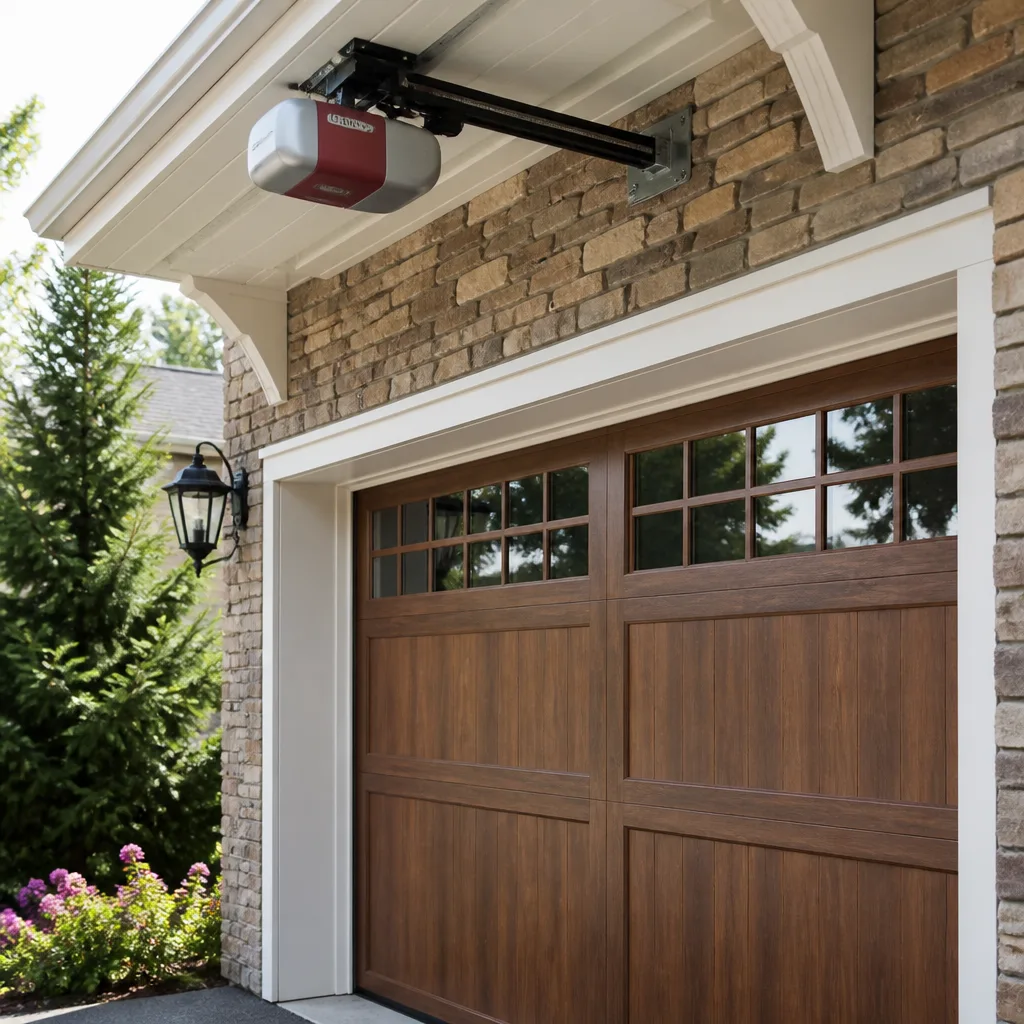
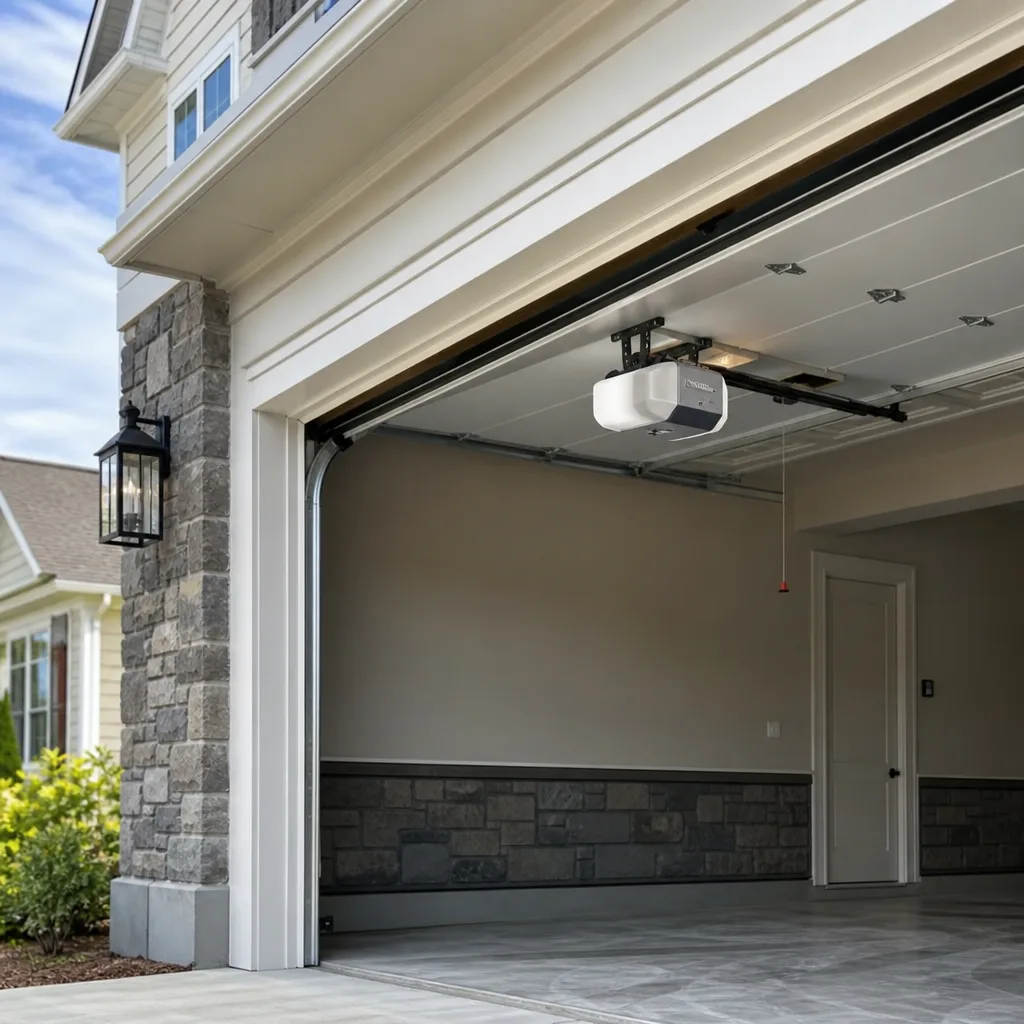
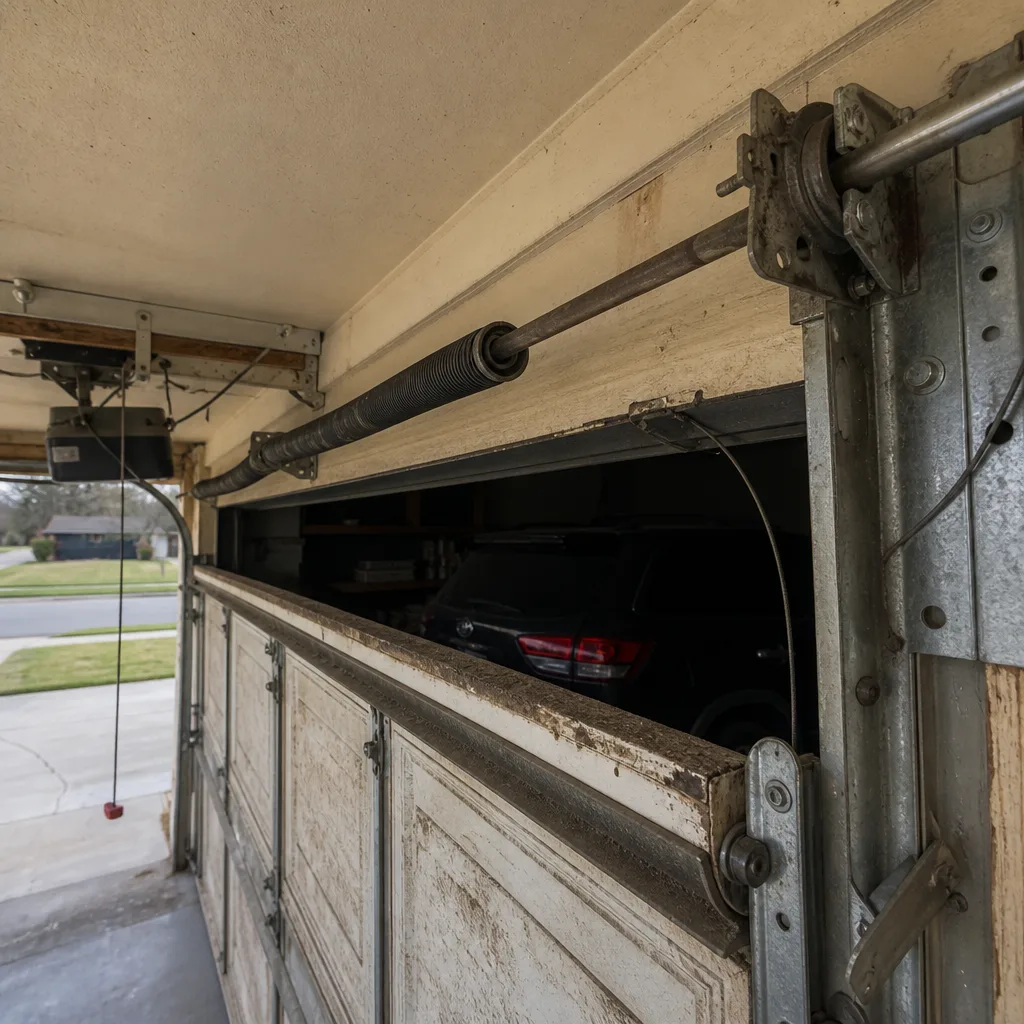 Before
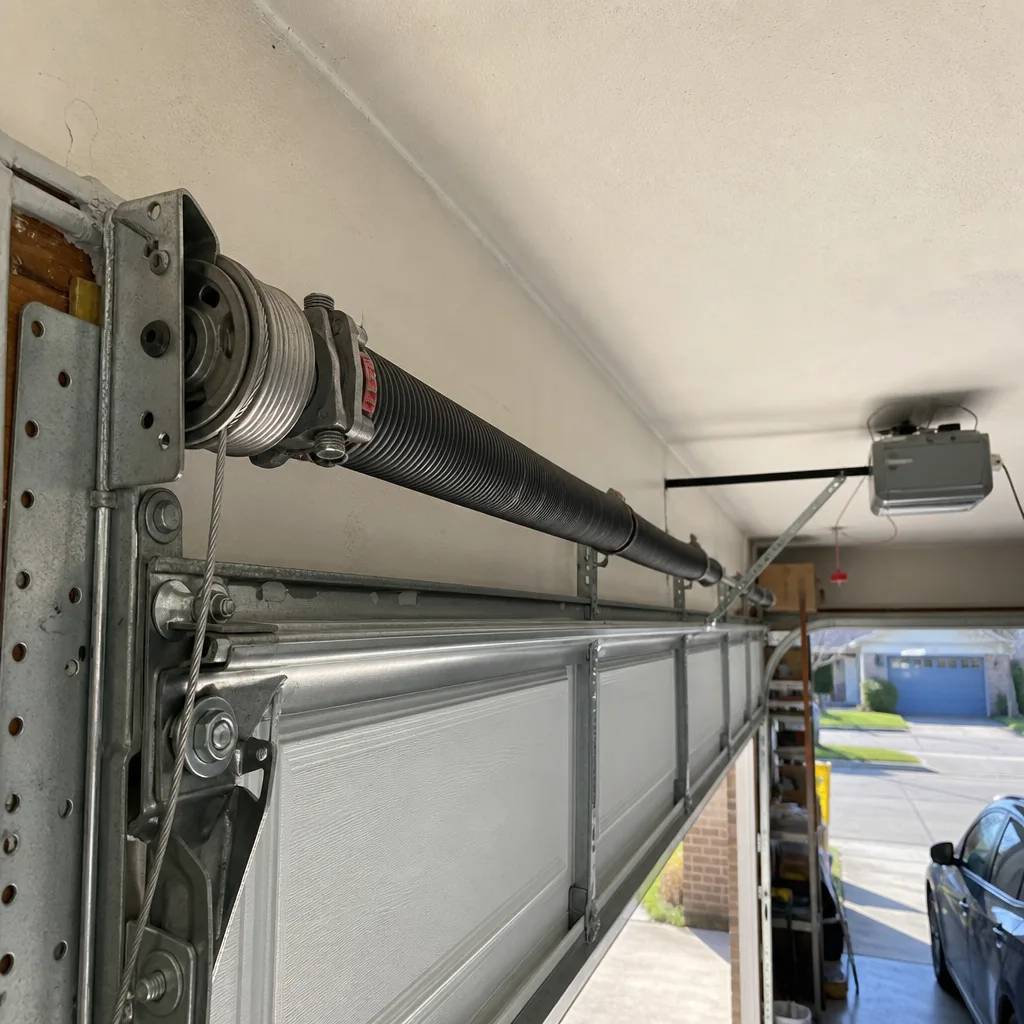 After
After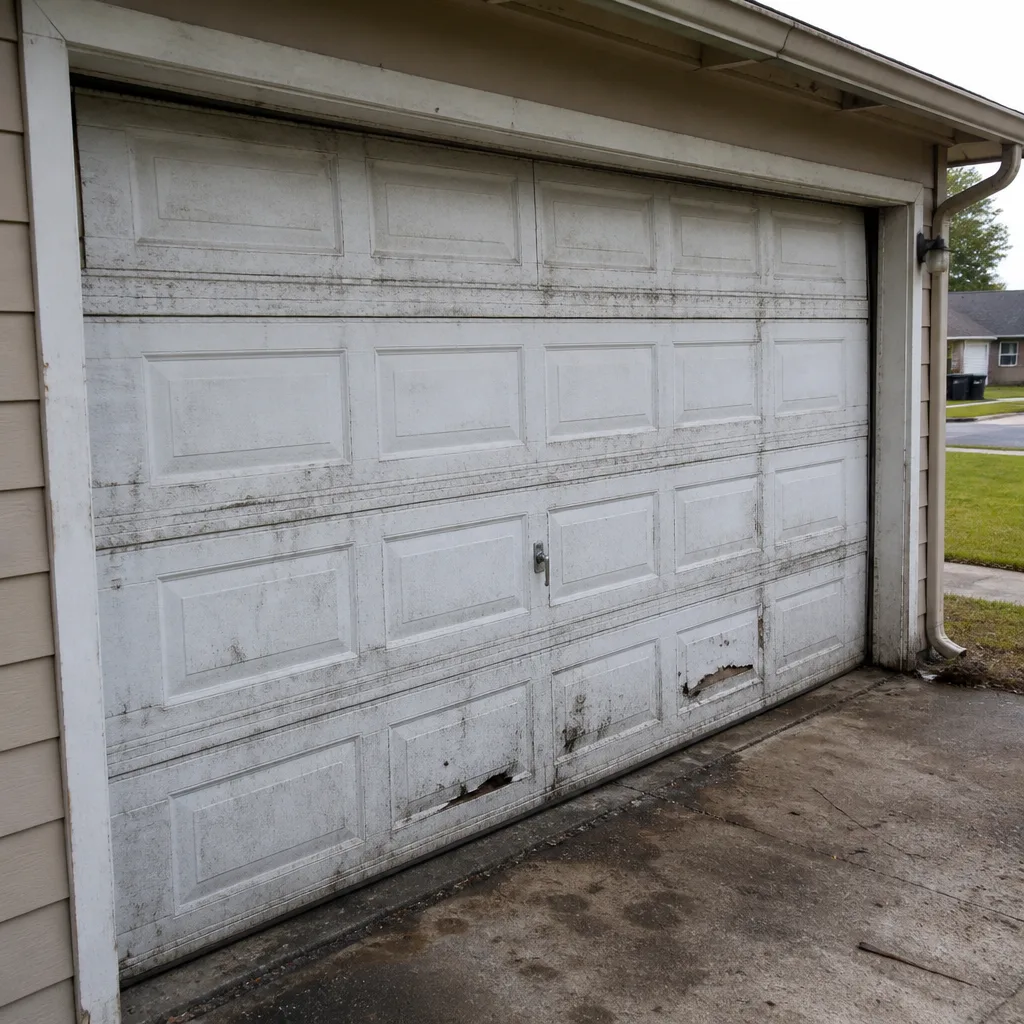 Before
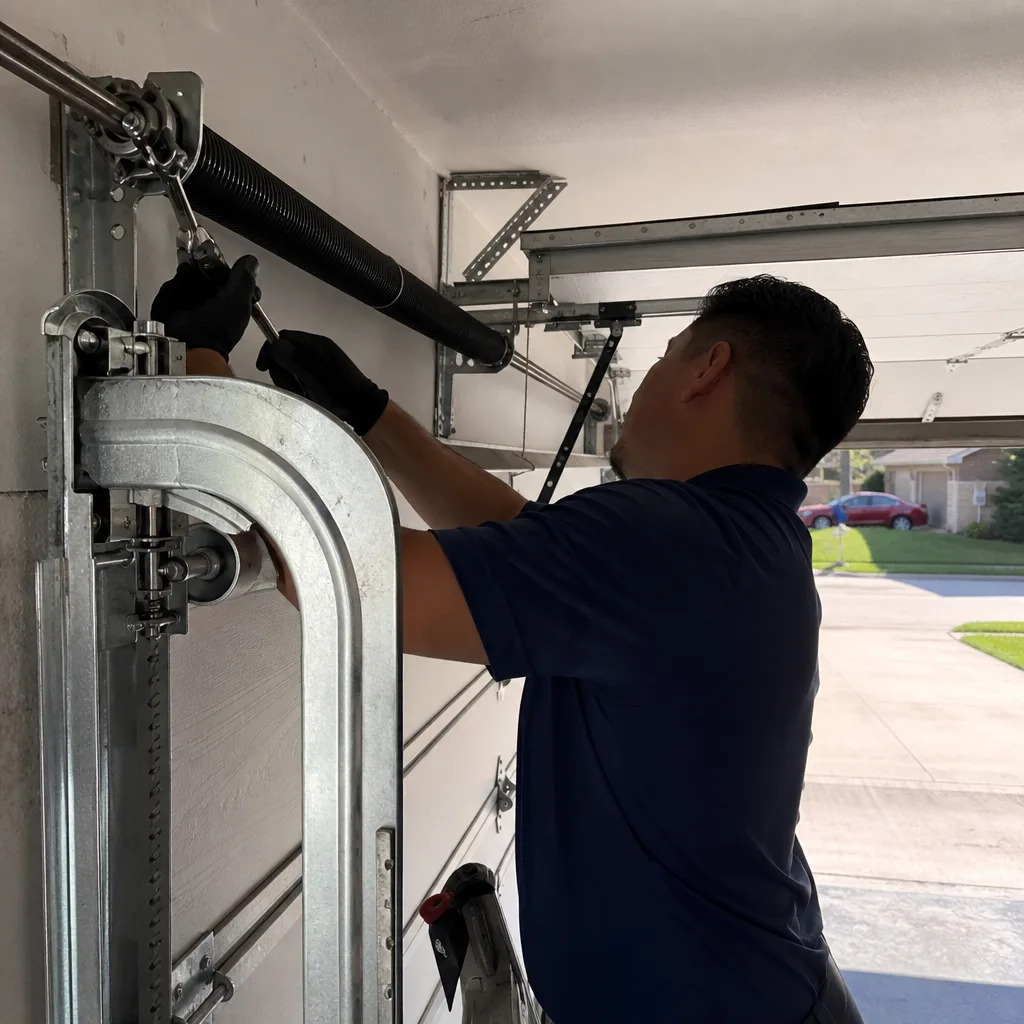 After
After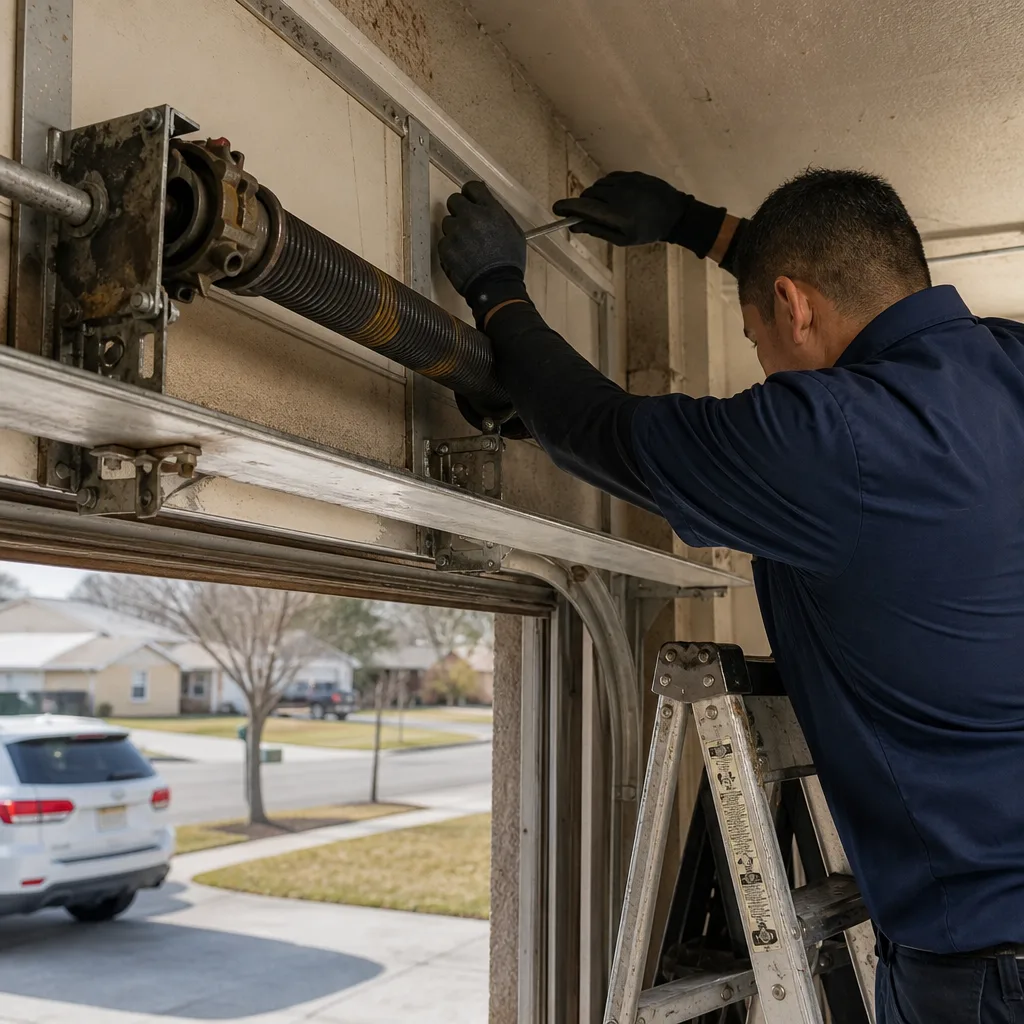 Before
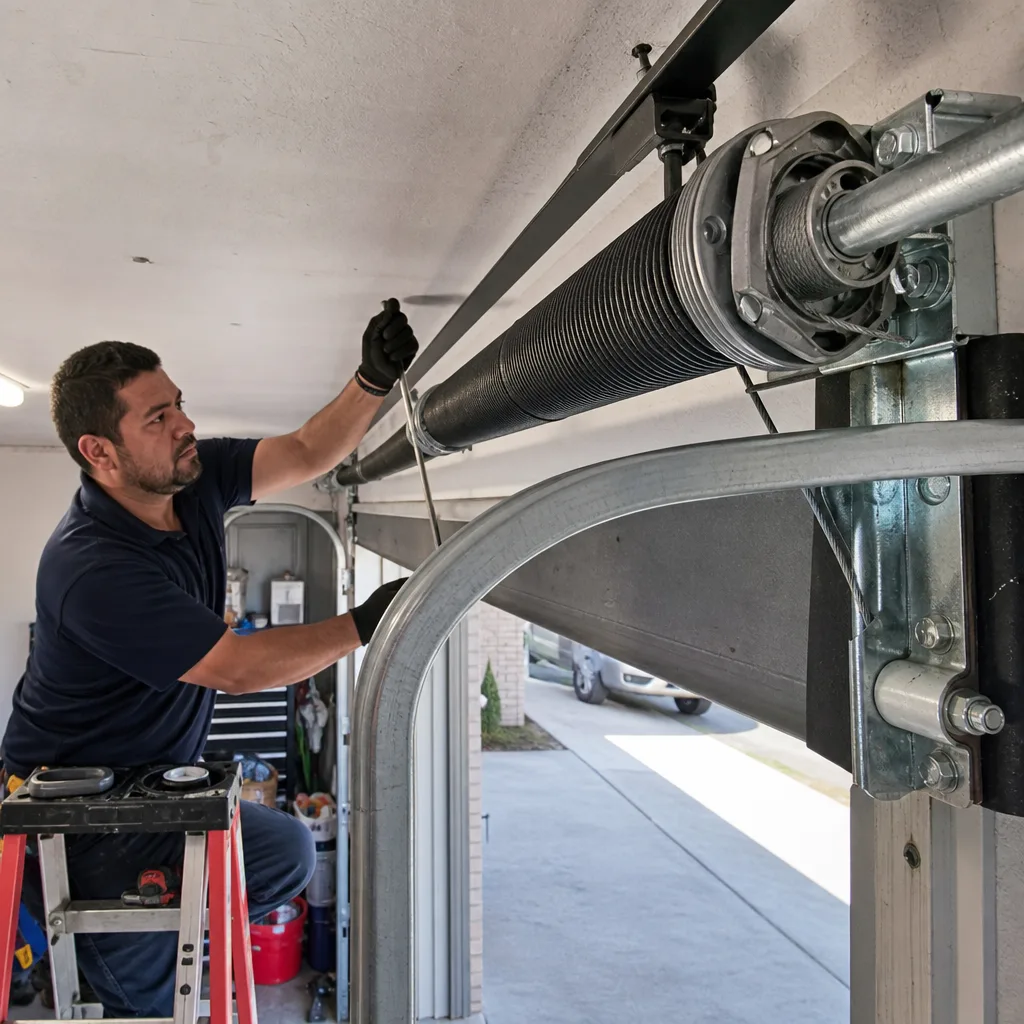 After
AfterHow to Hire a Garage Door Contractor in Baytown: A Step-by-Step Guide
The worst garage door job we’ve ever seen in Baytown didn’t look wrong on the day it was installed. It looked fine. The door went up and down, the homeowner paid, and the crew left. Sixteen months later, a spring snapped at 6:00 a.m. The homeowner called the original contractor. The number was disconnected. The “five-year warranty” turned out to be a verbal promise from a guy with a magnet sign on his truck. This guide is for homeowners who’ve lived through something similar, or who never want to, and want more guides & resources to protect themselves. We’ll show you the specific questions, documents, and quote details that separate contractors who stand behind their work from those who disappear the moment your check clears.
Quick Answer
To hire a garage door contractor in Baytown, verify three documents before anyone arrives: a current Texas contractor license, a certificate of liability insurance, and a written quote with line-item parts and labor. Then confirm the contractor stocks common springs, cables, and openers locally - not orders them after diagnosis - and offers a written labor warranty of at least 90 days. The lowest bid rarely satisfies these conditions.
Table of Contents
- Why Star Ratings Fail Most Homeowners
- The Three Documents to Request Before Any Visit
- How to Decode a Quote Line by Line
- Why a Flat Price Stated Upfront Is the Strongest Quality Signal
- How to Tell If a Contractor Stocks Parts Locally or Orders After Diagnosis
- What a Written Warranty Looks Like Versus a Verbal Promise
- Specific Red Flags We’ve Seen in the Baytown Market
- Common Mistakes to Avoid
- When to Call a Professional
- Frequently Asked Questions
- The Bottom Line
Why Star Ratings Fail Most Homeowners
Most homeowners in Baytown start their search the same way: they type “garage door repair” into their phone, scan the star rating, and call the first name with four and a half stars or better. This filters out almost nothing that matters.
Here’s why. A garage door spring replacement takes about ninety minutes when done correctly. It takes about forty-five minutes when done fast. The fast version uses a spring one cycle rating below specification, skips the cable inspection, and torques by feel instead of by winding chart. On day one, both doors work. On day one, both customers leave five-star reviews because the technician was polite and the price seemed fair. The difference shows up at month nine, or month fourteen, when the undersized spring fails early and the ignored cable frays through. By then, the review is already written. The star rating is locked. The contractor has moved on.
Star ratings measure customer satisfaction at the moment of payment. They do not measure whether the torsion spring was properly sized for the door weight, whether the bearing plates were replaced along with the spring, or whether the technician ran the door through a complete balance test before leaving. These are the things that determine whether you call again in two years or ten.
In our experience serving Baytown since 2016, the homeowners who get taken advantage of are not careless people. They are busy people who trusted a shortcut that looks reasonable. This guide replaces that shortcut with a process. Each step below is designed to reveal what a star rating cannot: whether the contractor knows the work, stocks the parts, and will still answer the phone when something goes wrong.
Baytown’s climate adds another layer. The humidity coming off Trinity Bay accelerates rust on ungalvanized hardware. The summer heat cycles stress springs faster than in drier inland markets. A contractor who works here regularly knows this and specifies zinc-coated springs and hardware accordingly. A contractor who drives in from Houston for the occasional job does not. The questions below will help you tell the difference.
The Three Documents to Request Before Any Visit
Before you give any contractor your address in Baytown, request three documents by email or text. A legitimate operator produces them without hesitation. A hesitant or evasive response is itself information.
1. Current Texas Contractor License
Texas requires garage door contractors to hold a valid license through the Texas Department of Licensing and Regulation (TDLR). The license number should be current and match the business name on the quote. Ask for it. Then verify it on the TDLR website. This takes ninety seconds and eliminates unlicensed operators who cannot be held accountable if work fails.
Some contractors in the broader Houston market operate under a “handyman” exemption or subcontract through a licensed holder without their own credentials. This creates a liability gap if something goes wrong. The license you want belongs to the actual entity doing the work, not a shell company three layers up.
2. Certificate of Liability Insurance
Request a certificate of insurance (COI) naming the contractor’s business, with general liability coverage of at least $1 million per occurrence. Garage doors are heavy. Springs store lethal tension. Accidents are rare but real. If a technician is injured on your property and the contractor lacks coverage, your homeowner’s policy may be drawn into dispute.
The COI should be dated within the last twelve months. Expired or “we’re getting it renewed” responses are not acceptable. A professional contractor in Baytown carries current coverage as a matter of course and emails the certificate without drama.
3. Parts Invoice Template or Sample Quote
This is the document most homeowners never think to request, and it reveals more than the other two combined. Ask the contractor to send a sample quote or a blank parts invoice template showing how they itemize charges.
What you want to see: separate lines for springs (with wire size, length, and cycle rating specified), cables (with diameter and length), rollers (with count and type), labor hours, and trip charge. What you do not want to see: a single line reading “spring repair - $289” with no breakdown, or “hardware included” with no specification of what hardware, from what manufacturer, with what warranty.
The “hardware included” line is where many Baytown homeowners get surprised. One contractor’s “hardware” means two springs and a pair of cables. Another’s means springs, cables, rollers, bearing plates, drums, and a full safety inspection. The same word covers vastly different scope. The parts invoice template shows you which contractor you are dealing with before anyone drives to your home.
How to Decode a Quote Line by Line
A garage door quote is a contract in miniature. Every line either creates clarity or creates a place to hide. Here’s how to read one like a technician would.
The Spring Line
A proper spring specification includes three numbers: wire gauge (e.g., 0.250), inside diameter (e.g., 2.00″), and length (e.g., 31″). It should also state the cycle rating: 10,000, 15,000, 25,000, or 30,000 cycles. The cycle rating tells you how many open-close operations the spring is engineered for.
A 10,000-cycle spring on a door used four times daily lasts about seven years. A 25,000-cycle spring lasts about seventeen. The contractor who quotes a 10,000-cycle spring without explaining the tradeoff is optimizing for low bid, not longevity. In Baytown’s climate, where humidity and heat cycling accelerate wear, the cycle rating matters even more.
Ask specifically: “What cycle rating are you specifying, and why?” The answer should reference your door weight, your usage pattern, and your preference for upfront cost versus lifespan. A technician who cannot explain this is guessing.
The “Hardware Included” Line
This is the most common source of post-job disputes. When a quote says “hardware included,” ask for an itemized list. At minimum, a complete spring replacement should include:
- Torsion springs (pair, matched for door weight)
- Lift cables (pair, correct length for door height)
- Cable drums (pair, inspected for wear)
- Bearing plates (end bearings, replaced if grooved or loose)
- Center bearing (replaced if worn)
- Rollers (all ten to twelve, inspected; replaced if cracked or flat-spotted)
- Spring anchor bracket (inspected for cracks)
If the quote does not specify each of these, ask what is excluded. The gap between “springs and cables” and “complete hardware refresh” is often $80 to $150 in parts cost. The contractor who hides this gap behind “hardware included” is betting you will not ask.
The Labor Line
Labor should be stated as a flat rate for the described scope, not an hourly estimate with a ceiling. “2 hours @ $95/hr, not to exceed $250” sounds protective but creates uncertainty. A flat labor rate for “complete spring replacement including balance test and safety inspection” is cleaner. You know the total before work begins.
The Trip Charge or Service Call Fee
Some Baytown contractors quote a low labor rate and recover margin through a separate trip charge of $75 to $125. Others roll trip charge into labor for a single, all-in price. Neither approach is wrong, but only one is transparent. Ask: “Is the trip charge included in the total you just quoted, or is it additional?”
At Mainspring Garage Door Co. in Baytown, we quote one flat price that includes travel, diagnosis, parts, labor, and testing. The number we state is the number on the invoice. No line-item surprises, no “oh, we also found…” add-ons after work starts.
Why a Flat Price Stated Upfront Is the Strongest Quality Signal
The way a contractor prices reveals how they think about risk, preparation, and customer relationship. There are three common pricing models in the Baytown garage door market, and only one consistently correlates with quality work.
Model 1: Diagnostic Fee Plus Open-Ended Repair
The technician arrives for $49 to $89, “diagnoses” the problem, and presents a repair estimate on the spot. This model favors the contractor. The homeowner is already invested, the door is already disassembled or inoperable, and psychological pressure is high. The final bill often exceeds the initial phone estimate by 30% to 60%.
Model 2: Low Base Price With Conditional Add-Ons
The quote sounds attractive - “$189 spring replacement” - but carries conditions. “Price assumes standard size, standard configuration, no additional parts needed.” Every garage door has quirks. The conditional quote almost always expands. By the time the technician explains why your door is “non-standard,” you are committed.
Model 3: Flat Price Stated Before Arrival
The contractor asks specific questions over the phone: door dimensions, material, current symptoms, brand of opener if applicable. They reference a pricing schedule built from thousands of prior jobs. They quote a flat price that includes all foreseeable parts and labor. If unexpected conditions arise, they absorb the cost or explain the rare exception before proceeding.
This model only works when the contractor knows the work deeply enough to predict outcomes. It requires experience, standardized parts inventory, and willingness to accept occasional losses on edge cases. In other words, it requires a established operation, not a fly-by-night.
The flat price is the single most telling quality signal because it is incompatible with corner-cutting. A contractor who plans to use undersized springs, skip the cable inspection, or send an untrained technician cannot afford to guarantee a flat price. The risk of callback would bankrupt them. The flat price forces competence.
Our 90-Day Done Right Promise works the same way. We put it in writing on every job because we know our work. If we were cutting corners, that promise would put us out of business.
How to Tell If a Contractor Stocks Parts Locally or Orders After Diagnosis
This distinction costs homeowners days of waiting, multiple appointments, and sometimes additional trip charges. Yet almost no one asks about it during the initial call.
The Question to Ask
“For a standard torsion spring replacement on a 16-foot steel door, do you have the springs on your truck right now, or would you need to order them?”
The answer tells you everything. A contractor who stocks common springs, cables, rollers, and openers on every service vehicle completes most Baytown jobs in a single visit. A contractor who orders after diagnosis schedules a second appointment, often two to five business days out, and sometimes charges a second trip fee.
Why This Matters in Baytown Specifically
Baytown’s position on the Gulf Coast means we see conditions that accelerate wear: salt air from Trinity Bay, high humidity, and temperature swings that stress metal components. Springs fail in clusters during season changes. When three doors in a neighborhood fail the same week, the contractor who stocks locally clears the backlog in days. The contractor who orders from a distributor in Dallas clears it in weeks.
We keep our trucks stocked with springs in the ten most common wire sizes and lengths for Baytown’s prevalent door configurations, plus cables, rollers, bearing plates, and openers from Genie, Clopay, and Wayne Dalton. Most repairs finish in one visit because the parts are already on the truck. This is not exceptional service. It is standard practice for a shop that does this work every day.
The Follow-Up Questions
- “If my door needs a spring size you don’t stock, how long until you can return?”
- “Is there a separate trip charge for the return visit?”
- “Do you stock openers, or only repair existing ones?”
A contractor who answers “same day or next morning,” “no,” and “yes, we stock and install” is operationally serious. Any other combination suggests a smaller operation or a middleman who subcontracts installation to another party.
What a Written Warranty Looks Like Versus a Verbal Promise
The warranty is where contractors separate into two categories: those who stand behind their work and those who hope you lose their number. The difference is paper.
The Verbal Promise
“Don’t worry, if anything goes wrong, just call me. I’ll take care of it.” No dates. No scope. No business name printed anywhere. Six months later, the number goes to voicemail. The voicemail fills up. The magnet sign on the truck has a different name now.
We’ve met dozens of Baytown homeowners who accepted verbal warranties. None have ever successfully enforced one.
The Weak Written Warranty
A one-page invoice with “90-day warranty on parts and labor” typed at the bottom. Better than nothing, but barely. It does not define “warranty” - does it cover callback labor, or only replacement parts? Does it require the homeowner to pay a new trip charge? Does it exclude damage from “normal wear,” a loophole wide enough to drive a truck through?
The Strong Written Warranty
A separate document or clearly printed invoice section that specifies:
- Exact duration (e.g., 90 days from completion date)
- What is covered (parts, labor, trip charge for callback)
- What triggers coverage (failure due to defective part or installation error)
- How to initiate a claim (phone number, no paperwork required)
- Response commitment (e.g., “we return within 24 hours”)
Our 90-Day Done Right Promise states all of this in writing on every invoice. If the work is not right, we return at no charge. No dispute process, no “send photos first,” no “we’ll check if it’s covered.” We know our work, so we do not hide behind fine print.
When evaluating contractors in Baytown, ask to see a blank copy of their warranty language before you hire them. A contractor who refuses has something to hide. A contractor who produces it promptly has confidence in their process.
Specific Red Flags We’ve Seen in the Baytown Market
After 42 years in this trade and eight years serving Baytown specifically, we’ve seen patterns that predict bad outcomes. None of these are definitive proof of dishonesty, but each should prompt additional verification.
- Pressure to decide immediately. “I can give you 10% off, but only if you sign today.” Professional work does not need urgency tricks. The discount is covering something the contractor does not want you to research.
- No physical address or only a PO box. A legitimate garage door contractor in Baytown has a shop, a warehouse, or at minimum a verifiable local address. The “we’re mobile” explanation often means “we disappear when problems arise.”
- Payment required in full before work begins. Standard practice is partial payment or payment upon completion. Full upfront payment removes your leverage if work is substandard.
- Quotes by text without seeing the door. Some repairs can be estimated accurately by description. Others cannot. A contractor who quotes every job by phone without asking detailed questions is not pricing carefully; they are fishing for appointments.
- “We work on all brands” but cannot name specific models. Factory familiarity matters. A technician who claims expertise with Amarr doors but cannot describe the difference between a Stratford and a Heritage model has never been to the factory training.
- No local references from the last six months. Reviews from 2019 do not reflect current staffing, ownership, or practices. Ask for three recent Baytown customers you can call. A contractor with local reputation provides them.
- Vehicle with out-of-state plates or temporary tags. The Houston metro area, including Baytown, sees traveling repair crews after major storms. They work cheap, leave fast, and cannot be found when callbacks start.
Common Mistakes to Avoid
- Choosing by price alone. A $189 spring replacement and a $289 spring replacement are rarely the same job. The lower price often reflects a 10,000-cycle spring, reused cables, and no balance test. Over five years, the “cheap” job costs more in early failure and repeat service.
- Not verifying the warranty in writing. Verbal promises evaporate. The written warranty is your only enforceable protection. Read it before you sign.
- Assuming all springs are the same. Springs are specified to door weight, track radius, and cycle life. The wrong spring works initially and fails prematurely. Ask for the specification sheet.
- Hiring based on speed of arrival alone. A contractor who promises “there in twenty minutes” at 10:00 p.m. may be competent, or may be desperate for work. Speed is relevant for emergencies, not for planned replacements. For garage door installation in Baytown, measured scheduling beats rushed arrival.
- Ignoring the permit question. New door installations in Baytown may require permitting through the city. A contractor who says “permits are a hassle, we don’t bother” is exposing you to code violations and resale complications. A contractor who handles permitting as part of the job is operating correctly.
- Not asking about technician training. Background checks and uniforms are baseline. Ask what training program technicians complete. Our journeymen train under the K.E.Y.S. values code: Krafted right, Every time, Your home first, Standing behind it. The specific program matters less than having one.
- Waiting until complete failure. A noisy door, slow response, or sagging on one side are early warnings. Addressing them during a garage door opener service in Baytown or tune-up prevents the emergency call at premium rates.
When to Call a Professional
Some garage door symptoms are maintenance items. Others are safety hazards that require immediate professional attention. Call a trained technician if you observe any of the following:
- A broken spring, identified by a loud bang and a door that will not lift manually or strains the opener
- A door that falls rapidly when released from the opener, indicating failed or weakened springs
- Frayed or separated lift cables, which can snap under load
- A bent or misaligned track that causes the door to bind or derail
- An opener that reverses unexpectedly or fails to respond to controls
- Visible gaps in door panels or compromised weather sealing after a storm
High-torsion spring work is genuinely dangerous. The stored energy in a wound torsion spring can cause severe injury or death if released improperly. We do not recommend DIY spring replacement under any circumstances. The cost of professional repair is modest compared to emergency room bills, and a trained technician identifies secondary wear that untrained eyes miss.
Mainspring Garage Door Co. offers free estimates in Baytown. Our phones are answered by a live person 24 hours a day, including nights, weekends, and holidays. Call (936) 246-0813 to schedule a visit or request a second opinion on any written estimate you’ve received.
Frequently Asked Questions
Most standard repairs in Baytown range from $180 to $450, depending on parts and door configuration. A single spring replacement on a standard residential door typically falls between $220 and $340, including parts, labor, and testing. We quote flat prices before any work begins, and our $50 Off Any Repair Over $250 standing offer applies automatically. Call (936) 246-0813 for an exact quote - estimates are free.
Replace if the door is over twenty years old, has structural rust, damaged panels that compromise insulation, or if repair costs exceed 50% of replacement price. Repair if the door is structurally sound and the issue is isolated to springs, cables, rollers, or opener components. In Baytown’s humid climate, steel doors with compromised finish deteriorate faster than in drier regions, which may shift the repair-versus-replace calculation. We provide written estimates for both options so you can compare.
Request the TDLR license number and verify it at tdlr.texas.gov. The license status, business name, and expiration date are public record. A contractor who cannot provide a number or whose number does not match their business name should not be hired. This verification takes under two minutes and is the single most effective fraud prevention step.
We install and service all major brands and have found Genie chain and belt drive units, LiftMaster belt drives, and Chamberlain Wi-Fi enabled models to hold up well in our coastal humidity when properly maintained. Key factors are weather-sealing of the motor housing and corrosion-resistant hardware. For garage door opener installation in Baytown, we assess your door weight, usage pattern, and smart-home preferences before recommending a specific model.
For emergency repairs - a door stuck open or closed, a broken spring with a vehicle trapped inside - same-day response is available from established local contractors. For non-urgent repairs and all installations, scheduling within one to three business days is standard. Be wary of contractors who promise immediate arrival for non-emergencies; this often indicates light workload rather than exceptional capacity. Our live answering service dispatches based on urgency and your schedule preference.
Some do. At Mainspring Garage Door Co., we maintain a permanent 5% discount for seniors and veterans, applied to any repair or installation. It does not expire, stack with other offers, or require a coupon code. We also offer a standing $89 Seasonal Tune-Up and free second opinions on any written estimate you’ve received from another contractor. These offers have been continuous since we opened in Baytown - they are not limited-time promotions designed to create false urgency.
The Bottom Line
Hiring a garage door contractor in Baytown comes down to three verifications and one principle. Verify license, insurance, and written warranty. Verify that the quote is itemized, the price is flat, and the parts are stocked locally. And hold to the principle that the lowest bid rarely satisfies these conditions. A square deal from a contractor who answers the phone, arrives with the right parts, and stands behind the work in writing is worth more than a cheap job that fails early and leaves you searching for someone new. The questions in this guide are designed to surface that distinction before any work begins. Use them, trust what they reveal, and you will not need this guide twice.
Written by Carl Dutton, Owner at Mainspring Garage Door Co., serving Baytown since 2016.