
Last updated September 10, 2026
Full 25-point door and opener safety check with every visit - springs, cables, rollers, tracks, and your LiftMaster or Chamberlain opener included
You get a price before we start. It does not change when the truck arrives.
 Before
 After
After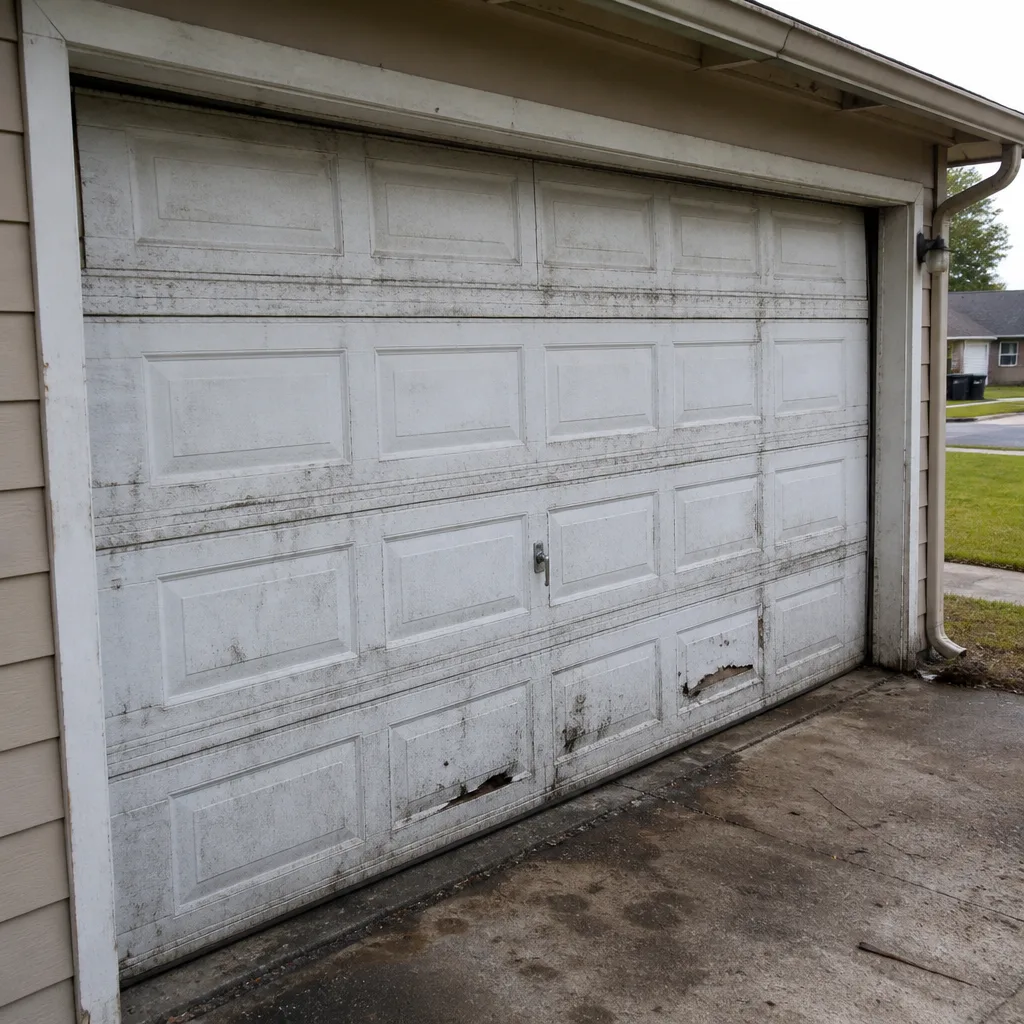 Before
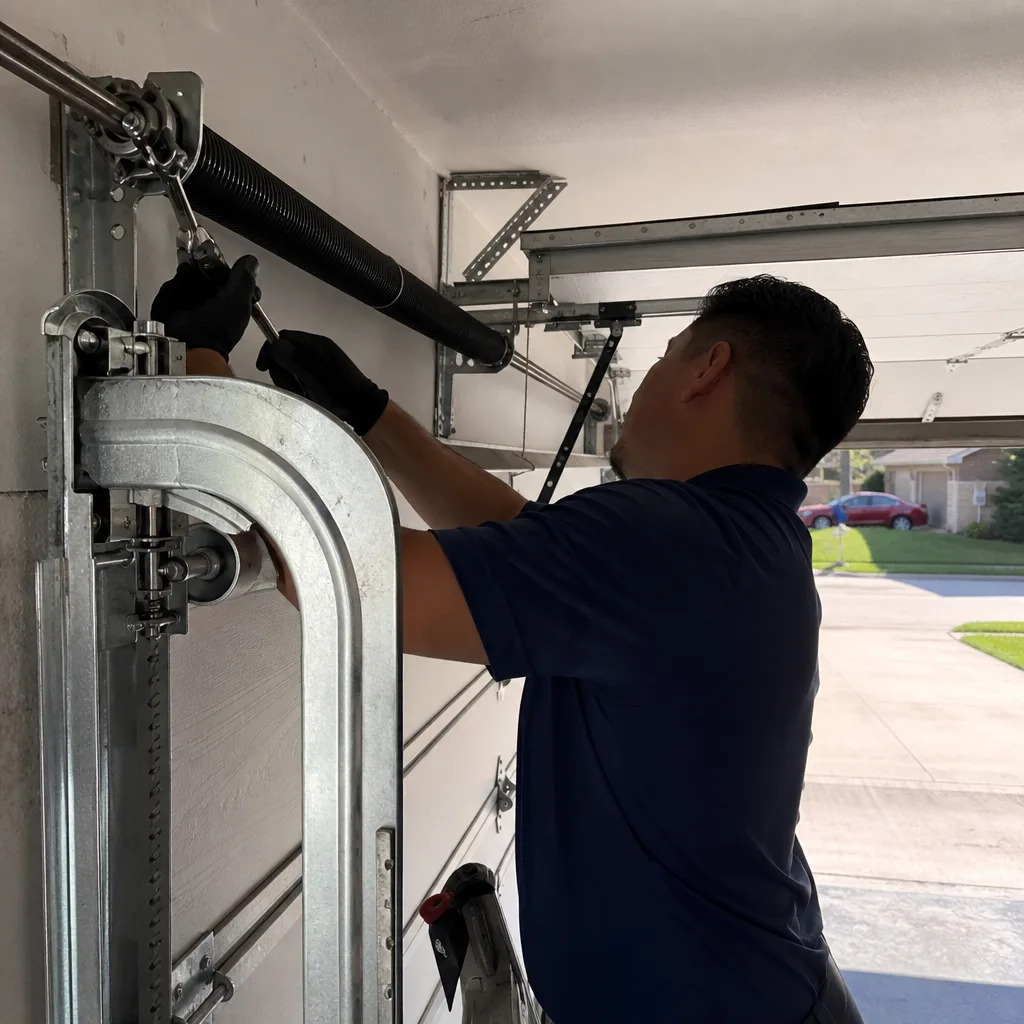 After
After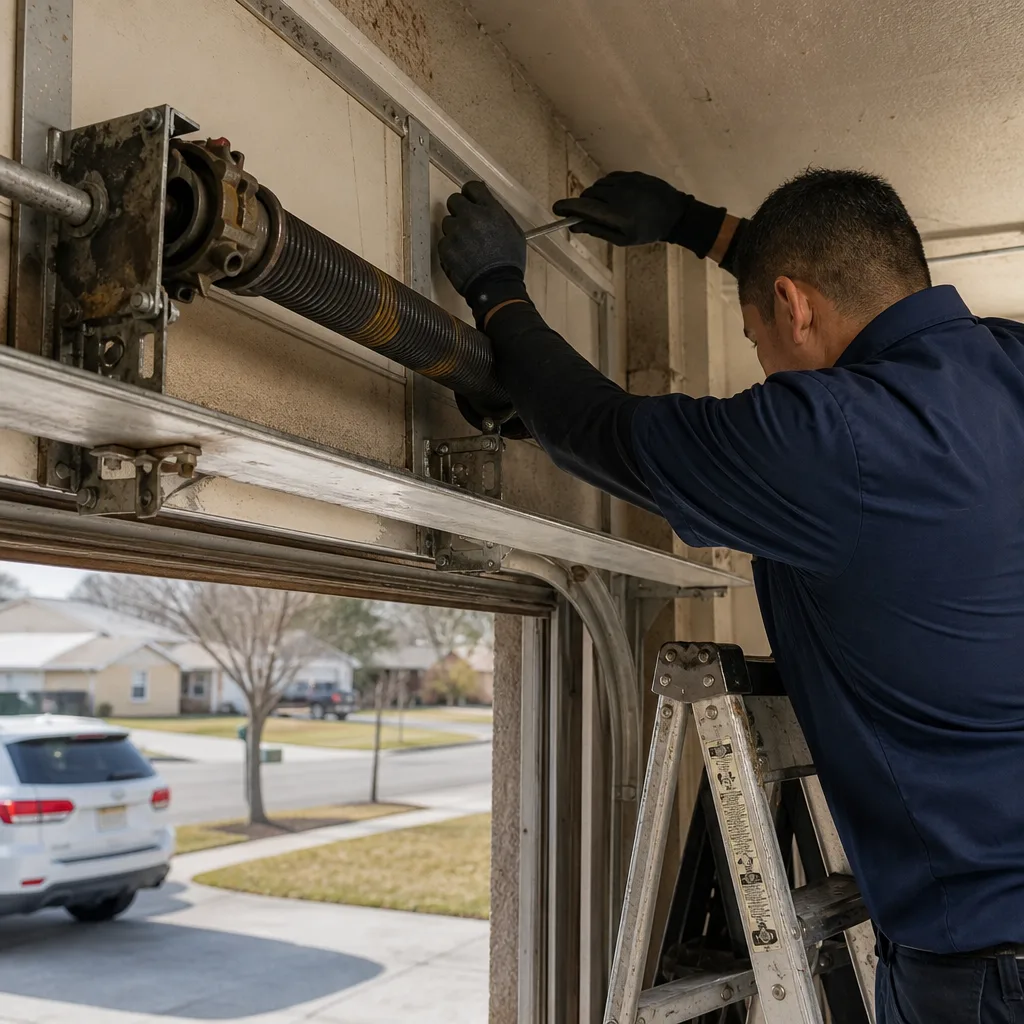 Before
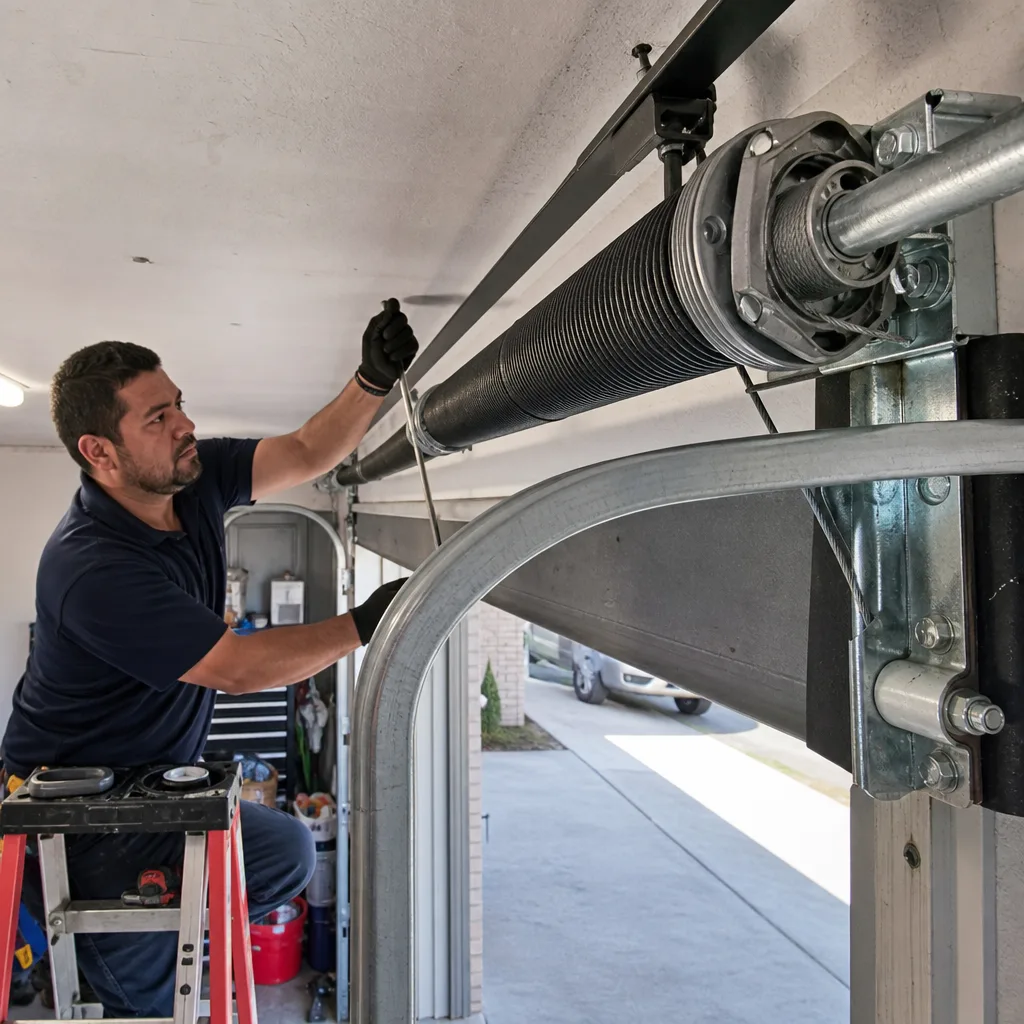 After
AfterGarage Door Permits, Codes & Inspections in TX: What You Need to Know
Here’s a fact that stops homeowners cold at the closing table: Texas does not require a statewide building permit for garage door work, yet unpermitted installations in Baytown have derailed home sales and triggered five-figure remediation bills. We’ve been called to jobs where a simple door replacement done three years earlier needed full tear-out because the original contractor skipped Harris County wind-load documentation. In this guide, we’ll walk you through exactly when Baytown homeowners need permits, what Harris County inspectors actually check, and how to protect yourself from the permit mistakes that surface years after the work is finished. For related reading, see our Garage Door Repair Maintenance Checklist for Baytown Homeowners.
Quick Answer
Garage door permits in Texas are governed by local ordinance, not state law. In Baytown, a permit is required for any new garage door installation, structural modification to the opening, or opener hard-wiring into electrical service. Simple repairs like spring replacement, cable adjustment, or roller swaps typically do not require permitting. Harris County’s wind-load requirements apply to all replacement doors regardless of permit status, and unpermitted work must be disclosed on seller’s disclosures, often triggering buyer inspection demands.
Table of Contents
- When Is a Garage Door Permit Required in Baytown?
- Harris County Wind-Load Codes and What They Mean for Your Door
- How to Pull a Permit: DIY vs. Contractor Routes
- What Texas Garage Door Inspectors Actually Look For
- How Unpermitted Work Surfaces During a Home Sale
- Permit Costs, Inspection Fees, and Realistic Timelines in Baytown
- Common Mistakes to Avoid
- When to Call a Professional
- Frequently Asked Questions
- The Bottom Line
When Is a Garage Door Permit Required in Baytown?
Baytown operates under the International Residential Code with local amendments adopted by the city council. The permit threshold hinges on scope, not cost. Understanding this distinction saves homeowners from both unnecessary paperwork and expensive oversights.
Permit required:
- New garage door installation on new construction or additions
- Replacement of an existing door when the opening dimensions change structurally
- Installation of a new garage door opener requiring dedicated electrical circuit or subpanel work
- Conversion from manual to automatic operation where no prior opener existed
- Any work affecting the structural header above the door opening
Typically no permit required:
- Spring, cable, roller, or hinge replacement on existing doors
- Track realignment or weatherstripping replacement
- Opener repair, remote programming, or safety sensor adjustment on existing units
- Cosmetic panel replacement of identical size and weight rating
The gray zone catches homeowners. Swapping a 16-foot non-insulated door for a 16-foot insulated model of comparable weight usually needs no permit. But upgrading to a significantly heavier solid wood door or adding windows that alter the wind-load rating triggers review. Baytown’s Building Division makes the final call, and they’re reachable at City Hall on West Baker Road. When in doubt, we tell homeowners to make the call. A ten-minute conversation beats a delayed closing.
We’ve worked in Baytown neighborhoods from Goose Creek to Bay Oaks, and the permit question comes up most often in two scenarios: post-hurricane replacements where insurance adjusters require documentation, and pre-listing renovations where sellers discover gaps in their permit history. The 1983 building stock in older sections of town predates current wind-load standards, so replacement doors on those homes almost always need engineering review even when the work itself seems straightforward.
Harris County Wind-Load Codes and What They Mean for Your Door
Harris County sits in a 130-mph wind-speed zone per the International Residential Code map. Every garage door installed or replaced in Baytown must carry a wind-load rating label proving it withstands that pressure. This requirement exists independent of permitting. Even if your project needs no building permit, the door itself must meet the standard.
What this means practically: the sticker on the door’s interior edge isn’t optional paperwork. It’s evidence of compliance. Inspectors, insurance adjusters, and home buyers’ agents all know to look for it. Doors without proper labeling face rejection at inspection or forced replacement after storm damage claims.
The wind-load calculation considers three factors:
- Door size: Larger doors experience greater total force. A 18-foot wide door in Baytown needs a higher pressure rating than an 8-foot door.
- Exposure category: Homes on open water or cleared lots face higher exposure than those shielded by mature trees or neighboring structures. The Baytown waterfront properties along Texas Avenue and in the Highlands area typically fall into Exposure C, the most demanding category.
- Mean roof height: Two-story homes and those on elevated foundations experience stronger wind pressures at the garage door level.
Manufacturers address this through wind-load kits: reinforced struts, upgraded track brackets, and heavier-duty hinges. Wayne Dalton and Amarr both produce Baytown-compliant assemblies with pre-engineered documentation. The key is ensuring your installer specifies and installs the complete kit, not just the door slab. We’ve seen cut-rate jobs where the door carried the right label but the installation omitted the required strut package. It passed visual inspection but failed pressure testing.
Harris County amended its wind-load provisions after Hurricane Ike’s 2008 damage surveys. Garage doors were the primary failure point in thousands of homes. The county now requires either impact-rated doors or active protection systems (shutters, panels) for homes within designated flood zones. Baytown’s flood zone map, available through the city’s GIS portal, determines whether this additional layer applies to your property.
For homeowners in the Mont Belvieu and Cedar Bayou areas just outside city limits, unincorporated Harris County rules apply. The permitting authority shifts to Harris County Public Infrastructure, but the wind-load standard remains identical. We’ve completed jobs in both jurisdictions and the documentation requirements differ more than the physical installation.
How to Pull a Permit: DIY vs. Contractor Routes
Baytown offers two permit paths, and the choice affects liability, timeline, and inspection scheduling.
Option 1: Homeowner-obtained permit
The homeowner applies directly through Baytown’s Community Development Department, pays the fee, and becomes the responsible party. This route works for capable DIYers but carries a catch: the homeowner assumes full liability for code compliance. If inspection fails, the homeowner coordinates corrections. If work causes damage, the homeowner’s insurance bears primary exposure. Baytown requires homeowner-permitted work to be performed by the applicant or immediate family members. Hiring a handyman under a homeowner permit violates the agreement and voids the permit.
Step-by-step homeowner process:
- Complete the residential building permit application at Baytown City Hall or through the online portal
- Submit two copies of the door manufacturer’s installation instructions and wind-load certification
- Include a site plan showing the garage location on the lot
- Pay the permit fee (see costs section below)
- Schedule rough inspection if structural work is involved; otherwise proceed to final
- Schedule final inspection within 180 days of permit issuance
- Receive certificate of completion for your records
Option 2: Contractor-obtained permit
The licensed contractor pulls the permit under their registration number. This is standard practice for established garage door companies and shifts liability to the contractor’s license and insurance. At Garage Door Installation in Baytown, we handle permitting as part of our project workflow. The permit lists Mainspring Garage Door Co. as responsible party, and our insurance and bonding cover the work.
Critical verification step: Always confirm the permit exists before work begins. Baytown’s permit lookup tool is public. Enter the address and verify an active permit matches your project scope. Unscrupulous contractors have been known to claim permits were “pulled” when none exist. We’ve been called to remediate jobs where the homeowner discovered this at closing, sometimes years later. Learn to spot trouble early with our Garage Door Warning Signs: A Baytown Homeowner’s Reference Guide.
Liability if work proceeds without required permit:
- City can issue stop-work order and require exposed framing for inspection
- Double permit fees apply for retroactive applications
- Homeowner must disclose unpermitted work on seller’s disclosure; failure to disclose exposes seller to fraud claims
- Insurance may deny storm damage claims for unpermitted installations
- Mortgage lenders can require permit remediation as condition of sale financing
Baytown’s contractor registration requires proof of general liability insurance and a state-issued license for electrical or structural work. A garage door company pulling its own permits demonstrates organizational competence that correlates with workmanship quality. It’s a filter worth applying. See our How to Hire a Garage Door Contractor in Baytown: A Step-by-Step Guide for what else to look for.
What Texas Garage Door Inspectors Actually Look For
Baytown building inspectors follow a standardized checklist, but experienced contractors know the unwritten priorities. Understanding both layers prevents failed inspections and return trips.
The written checklist:
- Permit placard posted visibly at job site
- Door size matches permit application
- Wind-load rating label affixed to door interior, legible and matching approved documentation
- Track mounting brackets secured to structural framing with appropriate fasteners
- Spring system rated for door weight with safety cable on extension springs
- Photo-eye sensors installed 4-6 inches above floor, aligned and functional
- Manual release handle reachable from standing position, clearly labeled
- Opener hard-wired to dedicated circuit with GFCI protection where required
- Fire-rated door assemblies (where connecting garage to living space) carry proper UL label
What inspectors actually spend time on:
In our experience across hundreds of Baytown inspections, two items draw disproportionate scrutiny. First, the wind-load label itself. Inspectors photograph it. If the label is missing, damaged, or references a different door model than installed, inspection stops until manufacturer documentation resolves the discrepancy. Second, the header condition. Baytown’s clay soils and Gulf Coast humidity create a specific problem: header rot above garage openings. Inspectors probe with an awl. Soft wood triggers repair requirements before the door inspection can complete.
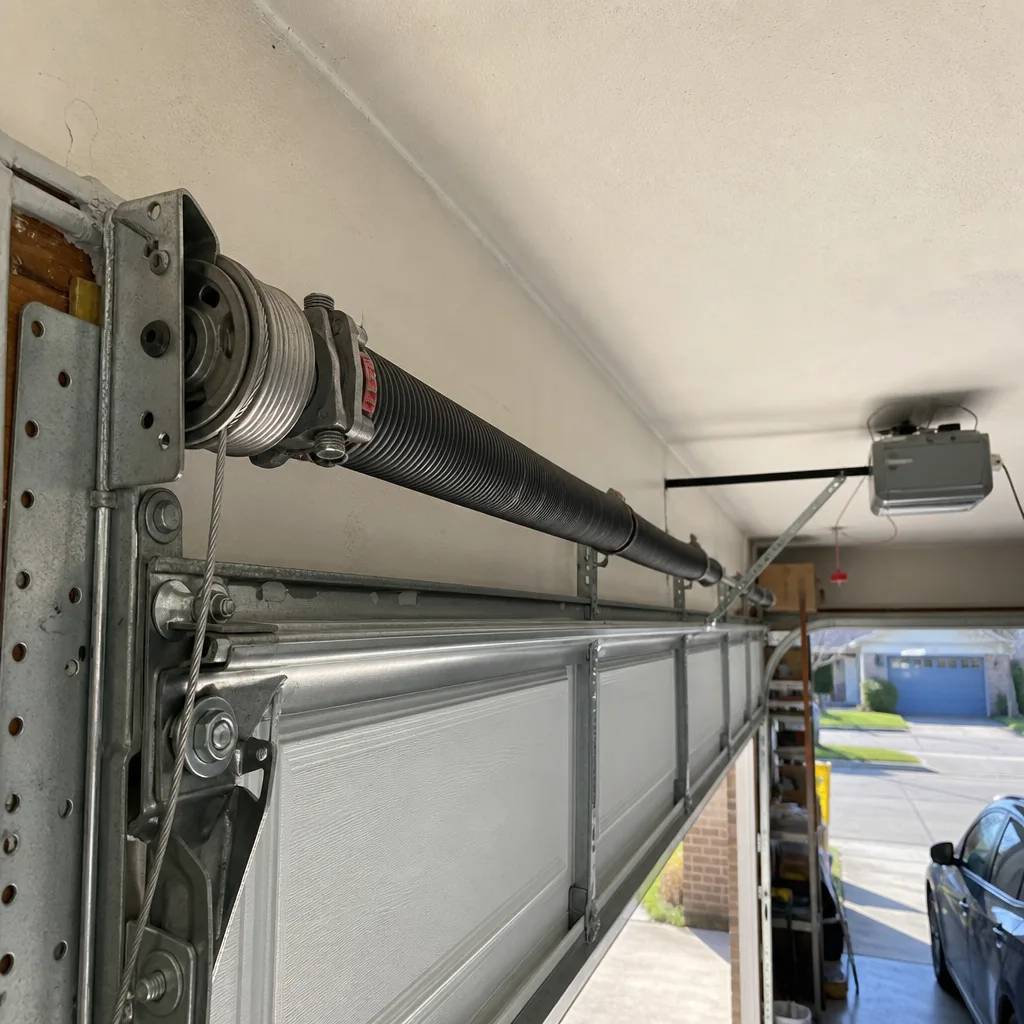
The spring safety check matters more than many homeowners realize. Extension springs without containment cables fail inspection outright. Torsion spring systems receive visual inspection for proper winding and anchor security. This is not cosmetic. A failed spring under load causes serious injury. We never recommend homeowners adjust or release tension themselves. The torque stored in a standard torsion spring can break bones.
Electrical inspection for opener circuits runs separately in Baytown when dedicated circuitry is involved. The building inspector checks physical installation; a licensed electrical inspector verifies circuit protection and grounding. Coordinating both inspections on the same day requires scheduling through the city’s unified portal, but confirmations sometimes slip. We build a buffer day into project timelines for this reason.
Final inspection timing matters for project completion. Baytown offers next-business-day scheduling for most residential work, but Monday mornings and Fridays book first. Weather delays affect exterior inspections. A door installed Thursday afternoon might not receive final sign-off until Tuesday if rain intervenes. Planning around this reality prevents frustration.
How Unpermitted Work Surfaces During a Home Sale
This is where the permit question transforms from administrative nuisance to financial crisis. Texas Property Code requires sellers to disclose known defects and unpermitted work on the Seller’s Disclosure Notice. The form explicitly asks about “work performed without required permits.” Answering falsely exposes the seller to post-closing fraud claims with actual damages plus attorney fees.
The discovery pathways:
- Buyer agent review: Experienced agents in the Baytown market request permit history through city records as standard due diligence. The request takes minutes online.
- Home inspector flag: Inspectors note missing permit placards, non-compliant wind-load labels, or workmanship that suggests unlicensed installation. Our market sees this most often with flip properties in the San Jacinto Mall corridor area.
- Title company search: Some title underwriters now run permit history as part of closing clearance, particularly for homes with recent renovation activity.
- Insurance verification: Buyer insurers may request wind mitigation inspection for Gulf Coast properties, revealing door compliance gaps.
Remediation costs when unpermitted work is flagged:
The cheapest path is retroactive permitting, if the work meets current code. Baytown charges double fees for retroactive permits. The door must be exposed for inspection, meaning interior trim removal at minimum. If the installation predates current wind-load standards, the door itself may require replacement. We’ve quoted $3,800 to $7,200 for full remediation on jobs where the original unpermitted installation cost $1,400.
The worst case involves concealed defects. A door installed without proper header support may function adequately for years before sagging or binding signals structural movement. By the time symptoms appear, surrounding framing requires repair. In Goose Creek, we addressed a 2019 installation where the contractor had notched a load-bearing header to accommodate taller track. The repair required engineered beam replacement and drywall reconstruction. The homeowner’s disclosure-driven permit search uncovered the original sin.
For buyers, unpermitted work becomes a negotiation lever. Sellers face pressure to remediate, credit, or reduce price. In a soft market, this kills deals. In Baytown’s 2023-2024 market correction, we’ve seen multiple transactions stall over $2,000 permit gaps on $400,000 properties. The proportion feels irrational until you understand buyer psychology: unpermitted work signals other corners cut.
Sellers can protect themselves by verifying permit history before listing. Baytown’s records extend to the mid-1990s for most residential properties. Gaps in that record for recent work warrant proactive resolution. A $200 retroactive permit beats a $5,000 closing concession.
Permit Costs, Inspection Fees, and Realistic Timelines in Baytown
Permit economics influence project planning. Under-budgeting the administrative side creates cash-flow surprises and schedule compression.
Baytown residential garage door permit fee structure:
| Project Type | Base Permit Fee | Plan Review Fee | Inspection Fee | Total Estimated |
|---|---|---|---|---|
| Replacement door, same size | $85 – $120 | $0 (standard plan) | $50 | $135 – $170 |
| New installation / structural modification | $150 – $220 | $75 – $125 | $50 – $75 | $275 – $420 |
| Electrical circuit for opener | $85 – $110 | $0 | $50 | $135 – $160 |
| Retroactive permit (penalty) | 2x base fee | $75 – $125 | $50 – $75 | $340 – $620 |
These figures reflect Baytown’s 2024 fee schedule. Harris County fees for unincorporated properties run approximately 15% higher. Fees are non-refundable if inspection fails.
Realistic timelines:
- Permit application review: 3-5 business days for standard residential
- Plan review (if required): additional 5-10 business days
- Permit issuance: same day upon approval
- Inspection scheduling: next business day if called by 3 PM
- Re-inspection after failure: next available slot, no priority
- Certificate of completion: 2-3 business days after final inspection pass
Total elapsed time for a straightforward replacement: one to two weeks if permitting proceeds concurrently with material ordering. Complex jobs with plan review: three to four weeks. Contractors who promise same-week completion on permitted work are either misleading you about the permit or have pre-existing approvals that may not transfer to your property.
Seasonal variation affects Baytown timelines. Hurricane season (June through November) creates permit backlogs as homeowners rush to complete wind-mitigation work. January through March sees lighter volume. Planning replacement during off-peak months avoids the queue.
Material lead times now often exceed permit timelines. Clopay and Amarr custom orders run 4-6 weeks for non-standard sizes or finishes. We coordinate permit application with material deposit to parallel-path the critical path. This is standard practice at Mainspring Garage Door Co. home and prevents the all-too-common scenario where the permit is ready but the door sits in manufacturing.
Common Mistakes to Avoid
- Assuming Texas uniformity: Austin, Dallas, and Houston operate under different amendments. Baytown’s rules are specific. Advice from a relative in Plano may mislead you.
- Relying on contractor verbal assurance: “We handle permits” means nothing until you verify the permit number in Baytown’s system. We provide permit numbers in writing before work begins.
- Ignoring wind-load on “like-for-like” replacements: Even identical dimensions may require upgraded rating if the original door predates current standards. The 130-mph zone changed in 2015.
- DIY electrical on opener circuits: Texas requires licensed electrician for new dedicated circuits. Homeowner electrical permits don’t cover this work in Baytown. The fire risk isn’t theoretical; we’ve seen melted junction boxes from improper wire gauge.
- Discarding documentation: Keep permits, inspection certificates, and manufacturer wind-load certifications for the life of the door plus ten years. Digital copies suffice. You’ll need them at sale or after major storm damage.
- Neglecting flood zone requirements: Baytown properties in AE zones need additional corrosion-resistant hardware. Standard track packages rust prematurely in salt-air flood conditions. We’ve replaced three-year-old hardware in the Highlands area that should have lasted fifteen.
- Confusing homeowner’s insurance with code compliance: Your insurer may pay for storm damage to a non-compliant door, then non-renew your policy. Compliance and coverage are separate questions.
When to Call a Professional
Permit complexity escalates quickly beyond simple repair work. Call a qualified garage door contractor when your project involves structural modification, electrical work, wind-load documentation, or any uncertainty about compliance status. The cost of professional guidance is fractional compared to remediation.
Specific scenarios warranting professional involvement: door replacement in flood zones, conversion from manual to automatic operation, header repair or replacement, post-storm damage assessment for insurance claims, and pre-listing permit verification for home sales. In each case, the contractor’s knowledge of Baytown’s specific requirements prevents expensive missteps.
Mainspring Garage Door Co. offers free estimates in Baytown. We’ll assess your project, identify permitting requirements, and provide a written quote with no obligation. Our trucks carry springs, cables, openers, and hardware for most brands including Raynor and Craftsman, and we complete most repair jobs in a single visit. For installation work, we handle permitting as part of our standard workflow and stand behind every job with our 90-Day Done Right Promise. Call (936) 246-0813 to schedule.
Frequently Asked Questions
Yes, if the replacement involves structural changes to the opening, electrical work for a new opener circuit, or a door with different wind-load requirements. A direct replacement of identical size and rating on existing track typically does not require permitting, though we recommend confirming with Baytown’s Building Division. Call (936) 246-0813 and we’ll walk you through your specific situation.
A standard replacement permit runs $135 to $170 including inspection. New installations with plan review cost $275 to $420. Retroactive permits carry double base fees. These are city-collected fees separate from installation labor and materials. We itemize permit costs in every Mainspring quote so there are no surprises on the bill.
Texas law requires disclosure on the Seller’s Disclosure Notice. Failure to disclose exposes you to post-closing fraud liability. Buyers typically demand remediation, price reduction, or walk away entirely. The cost to remediate usually exceeds the original permit fee by ten to twenty times. Verify your permit history before listing.
Impact rating is required only for properties in designated flood zones with specific exposure characteristics. All properties require 130-mph wind-load compliance. Baytown’s flood zone map determines whether additional impact protection applies. We check this for every installation quote in the Baytown area.
Baytown allows homeowner-permitted work performed by the homeowner or immediate family. If you hire any contractor, they must pull the permit under their registration. A homeowner permit with hired labor violates the permit agreement and voids compliance. For liability protection and inspection coordination, we recommend contractor-permitted work on all but the simplest DIY repairs.
The physical inspection takes 15 to 30 minutes. Scheduling availability is typically next business day. Re-inspection after failure requires rescheduling with no priority queue. Total administrative time from permit application to certificate of completion runs one to four weeks depending on project complexity and plan review requirements.
The Bottom Line
Texas’s lack of statewide garage door permitting creates a dangerous illusion of freedom. Baytown homeowners operate under specific local rules, Harris County wind-load mandates, and disclosure obligations that bite hardest at home sale time. The permit question isn’t bureaucratic trivia; it’s financial protection. Verify requirements before work begins, document everything, and never assume a contractor’s verbal assurance substitutes for a permit number in the city system. The homeowners who sleep well are the ones who handled this right the first time.
Written by Carl Dutton, Owner at Mainspring Garage Door Co., serving Baytown since 2016.