
Last updated September 10, 2026
Full 25-point door and opener safety check with every visit - springs, cables, rollers, tracks, and your LiftMaster or Chamberlain opener included
You get a price before we start. It does not change when the truck arrives.
 Before
 After
After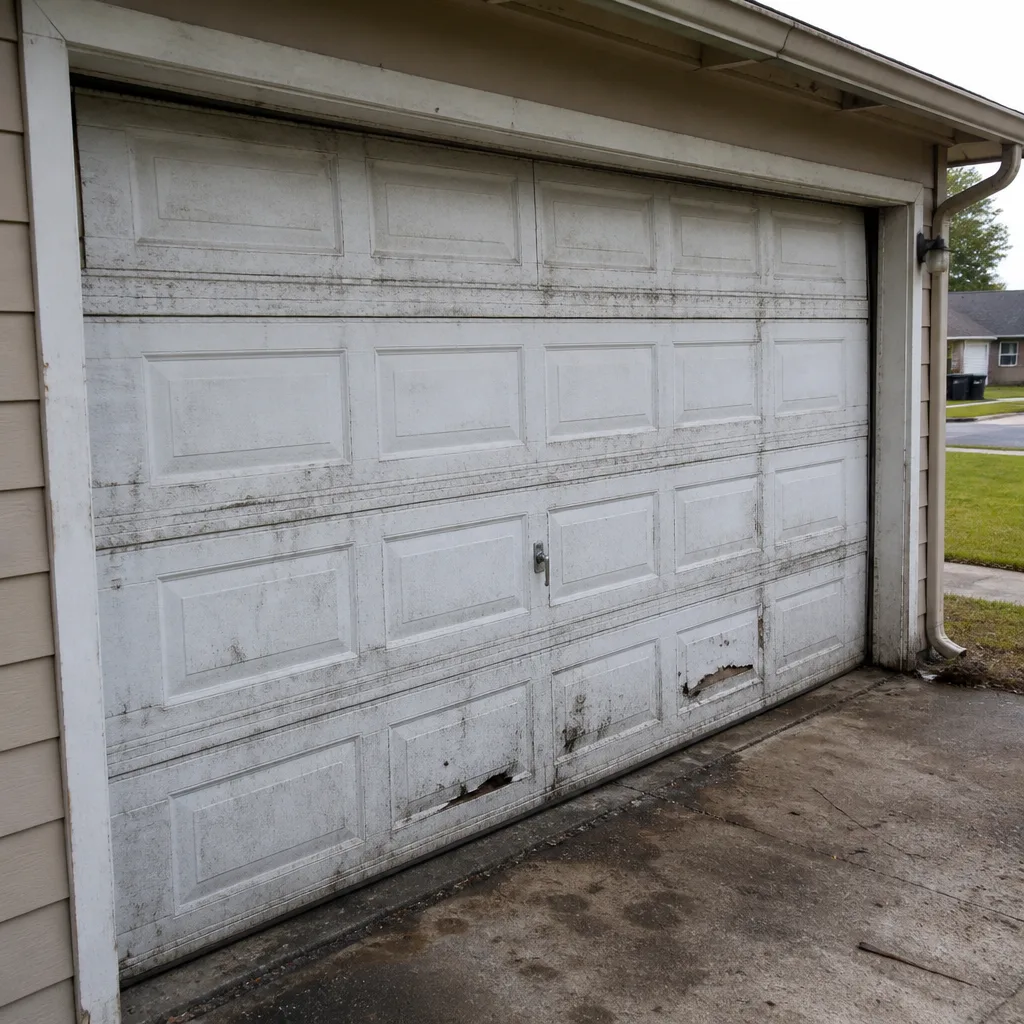 Before
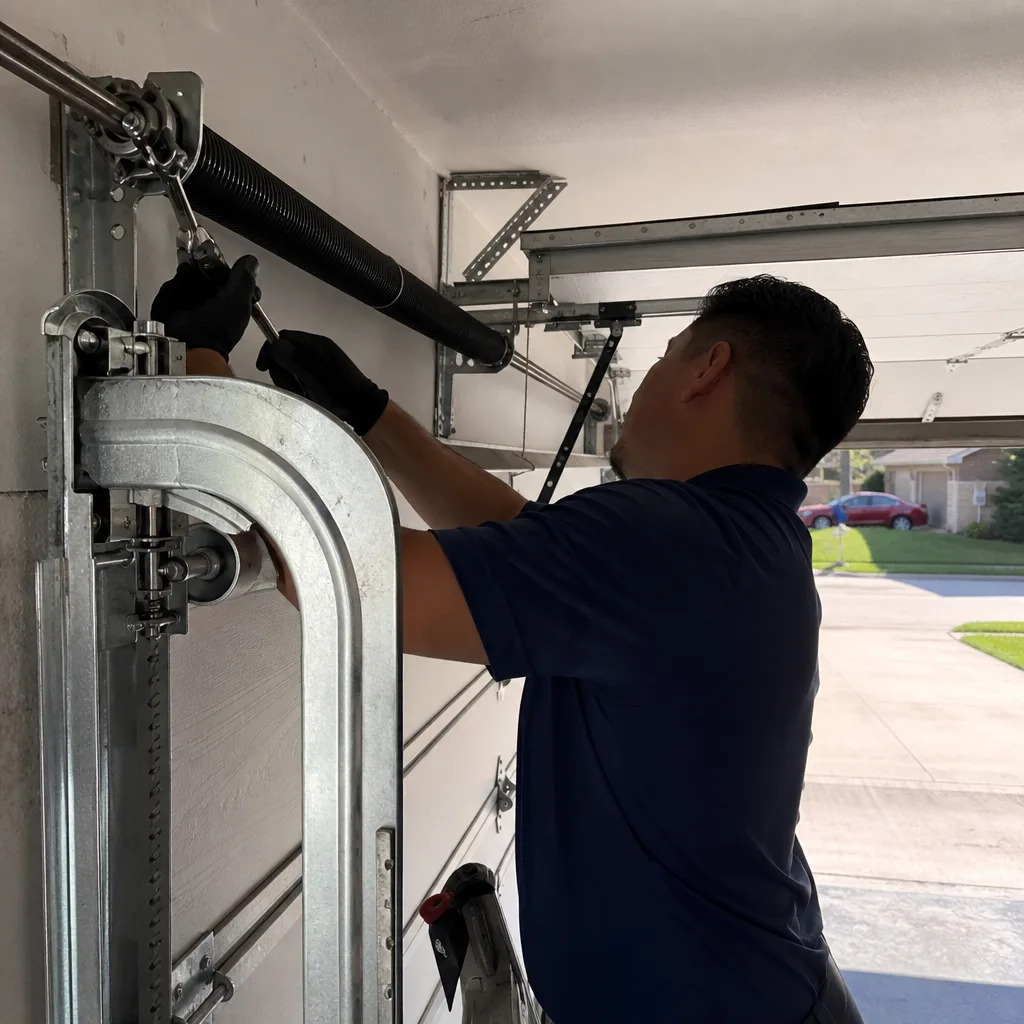 After
After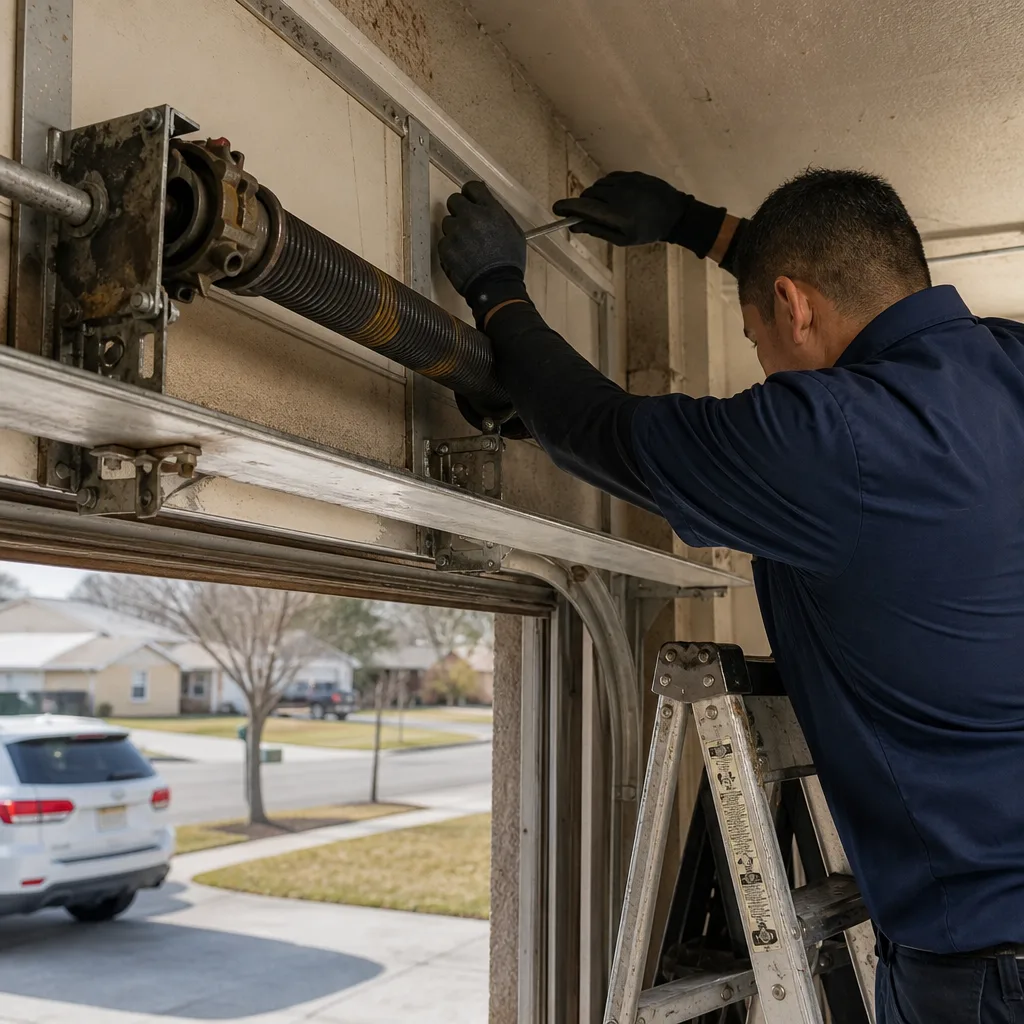 Before
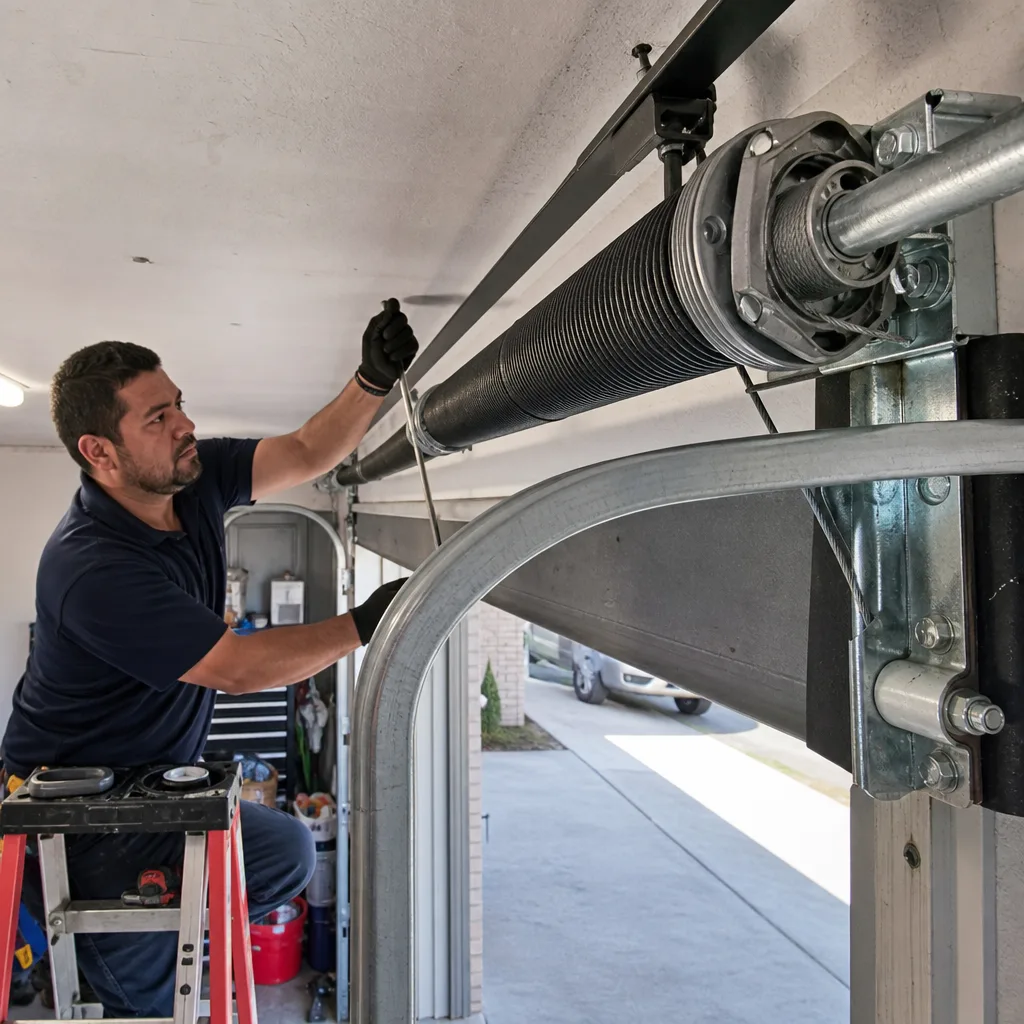 After
AfterThe Complete Guide to Garage Door in Baytown
Baytown sits within 30 miles of the Gulf Coast, which means the average garage door here faces more corrosive air hours per year than one installed in Dallas ever will - yet most homeowners shop by the same nationwide price lists. That is a costly mistake. In our 42 years serving this market, we have replaced steel doors that pitted through in four years, realigned frames that shifted with the clay soil, and installed wind-rated systems that passed inspection only because we knew the difference between Houston’s inland codes and Baytown’s actual exposure. This guide starts with Baytown’s environment and works outward: what to buy, what to avoid, and how to read a specification sheet so you are not buying twice. For more guides & resources, visit our blog.
Quick Answer
A garage door in Baytown needs to withstand salt-laden air from the Ship Channel, high humidity that accelerates rust, and wind loads that exceed inland Houston ratings. For most homeowners, that means a 25-gauge or heavier steel door with a baked-on polyester or fluoropolymer finish, wind-rated for 120 mph or higher, installed with aluminum or vinyl bottom seal and stainless or galvanized hardware. Expect to invest $1,200-$3,800 for a quality replacement, depending on size, insulation, and wind-rating tier - see our Garage Door Cost Breakdown: The Baytown Homeowner’s Reference for 2026 for detailed pricing.
Table of Contents
- How Baytown’s Climate Destroys Garage Doors Faster Than Inland Texas
- Which Door Materials Survive Ship Channel Salt Air
- Wind Rating: What Harvey Changed for Harris County Homeowners
- How Baytown Foundations Affect Door Alignment Over Time
- How to Read a Product Data Sheet for Coastal Corrosion Ratings
- Insulation, R-Value, and Energy Reality in Subtropical Garages
- Matching Your Opener to Baytown’s Conditions
- A Maintenance Calendar Written for Baytown’s Environment
How Baytown’s Climate Destroys Garage Doors Faster Than Inland Texas
Most garage door buying guides treat climate as an afterthought. In Baytown, it is the first variable.
The Ship Channel pushes marine air inland on prevailing southeast winds, carrying chlorides that settle on metal surfaces and begin electrochemical corrosion within months. Relative humidity here averages 75% annually and regularly exceeds 90% from May through October. That combination - salt plus sustained moisture - is what accelerates rust on unprotected steel, swells wood composites, and degrades standard rubber seals.
We see the pattern clearly in neighborhoods like Cedar Bayou and Goose Creek, where doors facing the open bay or channel show pitting and hardware corrosion three to five years ahead of identical installations in Mont Belvieu or Highlands. The difference is not manufacturing quality. It is exposure hours.
Baytown also sits in a high-risk wind zone. The 2017 Harvey landfall reminded homeowners that Harris County’s building codes, already stricter than national standards, still underestimated surge and wind-driven debris in specific corridors. Post-storm, the county adopted more granular wind-speed maps, and Baytown’s exposure category shifted in several zones.
What this means practically:
- Standard interior-grade hardware rusts through in 3-5 years here versus 10+ inland
- Uninsulated single-layer steel doors sweat in humid months, accelerating interior surface rust
- Bottom seals and weatherstripping degrade faster, letting water and pests enter
- Wind-load stickers from pre-2018 installations may no longer satisfy permit offices for replacement
We tell homeowners in Baytown to think of their garage door as exterior marine equipment, not interior household trim. That framing changes every decision that follows.
Which Door Materials Survive Ship Channel Salt Air
Not all steel is equal. Not all “fiberglass” means fiberglass. Here is what holds up in Baytown and what does not, based on what we have removed and installed across the city.
Steel Doors: The Details Matter
Steel remains the most common choice for good reason - when properly specified. The critical variables are gauge, coating, and edge sealing.
We specify 25-gauge or heavier face steel for Baytown installations. The 28-gauge doors common in budget lines flex in wind, dent easily, and their thinner substrate offers less material before corrosion penetrates. Heavier gauge costs more upfront. It costs less over the door’s life.
Coating is where most failures originate. Standard primed-and-painted steel begins showing rust at edges and panel seams within two years in coastal exposure. We look for:
- Baked-on polyester finish - minimum acceptable for Baytown; 10-15 year limited warranty against fade and chalk
- Fluoropolymer (PVDF) coating - premium tier; 20+ year color retention, superior chalk resistance, harder surface
- Galvanized substrate beneath the finish - zinc layer provides sacrificial protection if the topcoat is breached
Clopay’s Gallery and Canyon Ridge collections, specified with their Ultra-Grain or Intellicore finishes, are factory options we have tracked for over a decade in Baytown. The finish integrity holds. We have also installed Raynor doors with comparable coatings. The key is not the brand name but the specification: confirm the coating system on the data sheet, not the showroom photo.
Aluminum and Glass Doors
Full-view aluminum frames with tempered glass panels are increasingly popular in newer Baytown construction, particularly in subdivisions like Marrs Estates and along the waterfront. Aluminum does not rust. It does corrode - but the oxide layer is self-limiting, unlike steel’s scaling rust.
The vulnerability is hardware and fasteners. We specify 316 stainless steel or coated aluminum hardware for these installations. Standard zinc-plated steel fasteners will galvanically corrode when paired with aluminum in salt air. That is not opinion. That is chemistry we have cleaned up after.
Wood and Composite
We do not recommend natural wood doors for Baytown’s climate. The humidity cycling - 90% summer to 40% winter - causes expansion and contraction that cracks paint films and opens grain to moisture. We have replaced cedar doors in Old Baytown that rotted at the bottom rail in six years.
Fiberglass-composite skins over steel frames (Clopay’s Canyon Ridge Reserve, for example) offer the aesthetic of wood with dimensional stability. The fiberglass surface is inert to salt and moisture. The frame and hardware still need coastal-grade specification.
Vinyl Doors
Vinyl is impervious to salt and rust, but it expands significantly in heat. In direct south or west exposure common in Baytown’s older neighborhoods, we have seen vinyl panels warp and tracks bind. We use vinyl selectively - shaded exposures, light colors, with reinforced steel struts for rigidity.
Wind Rating: What Harvey Changed for Harris County Homeowners
Before August 2017, many Baytown homeowners understood “wind-rated” as a checkbox on a permit application - though permits and codes in Texas are more nuanced than that. Harvey changed that understanding permanently.
The storm made landfall as a Category 4 with sustained winds that exceeded design pressures in portions of Harris County. Post-event engineering surveys found that garage door failures - not roof lifts or window breaches - were the primary entry point for wind-driven water damage in thousands of homes. A failed garage door pressurizes the garage, then the attic, then lifts the roof structure from within.
Harris County and the City of Baytown adopted revised wind-speed maps in 2018, aligned with ASCE 7-16 standards. Baytown now falls in multiple zones:
- Exposure Category C - most inland Baytown neighborhoods; 120 mph design wind speed
- Exposure Category D - within approximately 1 mile of open water including the Ship Channel, Cedar Bayou, and Trinity Bay; 130-140 mph design wind speed
A door “rated for Houston” may not satisfy Baytown’s specific exposure. We see this conflict regularly when homeowners purchase doors from big-box retailers using zip-code generalizations. The sticker on the door must match the exposure category on your permit application.
Reading the Wind Label
Every wind-rated door carries a label with design pressure (DP) rating in pounds per square foot (psf). The conversion is not intuitive for homeowners, so here is the practical translation:
| Door Size (Single Car) | Minimum DP for 120 mph Zone | Minimum DP for 130+ mph Zone |
|---|---|---|
| 8 ft x 7 ft | +/- 16 psf | +/- 20 psf |
| 9 ft x 7 ft | +/- 15 psf | +/- 18 psf |
| 16 ft x 7 ft (Double) | +/- 14 psf | +/- 17 psf |
Note that larger doors require lower numerical DP because the total wind load is distributed across more area. The label must also specify “tested with” - meaning the specific track, spring, and hardware assembly that was validated. Substituting lighter hardware voids the rating even if the door panel itself is labeled.
We install wind-rated systems with reinforced struts, heavy-duty track brackets, and upgraded spring cycles specifically for Baytown’s exposure zones. The garage door installation in Baytown page details our process for permitting and inspection coordination.
How Baytown Foundations Affect Door Alignment Over Time
This is the section no national buying guide includes. Baytown’s soil and foundation types create garage door problems that are invisible at installation and unmistakable five years later.
The region sits on expansive clay soils - the Beaumont Formation and younger alluvial deposits - that shrink and swell with moisture changes. A single drought-to-flood cycle can move a slab corner by half an inch. That movement does not crack the foundation visibly. It tilts the garage door frame.
Slab-on-Grade Foundations
Most post-1960 Baytown homes, including the ranch-style construction common in Sterling Manor and Bay Oaks, sit on monolithic slabs. When the slab tilts, the garage door header tilts with it. The result is a door that closes on one side before the other, or rollers that climb the track on one jamb and bind on the other.
We measure frame squareness with a laser level on every service call. If the foundation has shifted, we can often compensate with adjustable jamb brackets, tapered bottom seals, or track realignment. Sometimes we recommend foundation repair first. We will not install a new door on a frame we know is out of square - it will fail prematurely and our name is on the work.
Pier-and-Beam Foundations
Older Baytown neighborhoods, including portions of Goose Creek and the historic district near Texas Avenue, include pier-and-beam construction. These foundations allow more accessible repair but also more differential movement between piers. We have seen garage door frames that are level in March and half-inch out in August, as clay dries and piers settle independently.
For these homes, we specify more flexible installation methods: slotted track brackets, wider clearances, and more frequent maintenance intervals. We also recommend against heavy insulated doors on pier-and-beam garages with significant movement history - the mass amplifies the stress on hardware.
The Baytown-Specific Check
Before quoting any door replacement in Baytown, we check three things that inland contractors often miss:
- Floor-to-header height at three points - left, center, right - to detect slab tilt or header sag
- Jamb plumb with a 4-foot level - not eyeball, not a carpenter’s square; actual plumb
- Concrete condition at the door opening edge - spalling or cracking here indicates ongoing movement
These measurements take five minutes. They prevent callbacks. They are part of why we can offer our 90-Day Done Right Promise in writing on every job.
How to Read a Product Data Sheet for Coastal Corrosion Ratings
Manufacturers know most buyers never read past the marketing brochure. The data sheet - the technical document filed with DASMA or ICC-ES - contains the facts that matter for Baytown.
Here is what to locate and how to interpret it.
Step 1: Find the Salt Spray Test Results
Look for ASTM B117 salt spray exposure hours. This is the standard accelerated corrosion test. The numbers to know:
- 250 hours - minimum for interior hardware; inadequate for Baytown
- 500 hours - entry-level exterior grade; marginal for coastal exposure
- 1,000+ hours - coastal-grade specification; what we require for hardware in Baytown
A door may carry a “limited lifetime” warranty on the panel but only 3 years on hardware. That hardware clause is where salt air does its damage. We have replaced springs and cables on 8-year-old doors where the panels still looked new.
Step 2: Check the Coating Specification by Component
The marketing photo shows the exterior face. The data sheet breaks down:
- Exterior face steel - coating type, thickness in mils, color retention warranty
- Interior face steel - often a lesser coating; critical because humid garages condense moisture on this surface
- End caps and stiles - edges are where corrosion starts; look for sealed or coated edges, not raw steel
- Hardware - spring wire coating, cable plating, roller plating, hinge finish
We specify doors with interior face coatings matching the exterior, or at minimum a baked-on primer. Raw galvanized interior faces will white-rust in Baytown’s humidity and stain anything stored in the garage.
Step 3: Verify the Wind Rating Components
As noted earlier, the door panel DP rating is only valid with the tested hardware assembly. The data sheet lists:
- Track gauge and profile
- Spring type, wire size, and cycle rating
- Number and placement of reinforcement struts
- Bracket type and fastener specification
If any component is substituted to reduce cost, the assembly is not wind-rated. We have inspected “wind-rated” installations in Baytown where the contractor used standard 14-gauge track instead of the tested 12-gauge, or omitted the specified struts. The sticker on the door does not make it compliant. The assembly does.
Step 4: Check the Insulation and Seal Specifications
For polyurethane-insulated doors, the data sheet lists:
- R-value (whole-door, not center-of-panel)
- Density of the foam fill
- Adhesive system bonding steel skins to foam core
Lower-density foam can delaminate from steel in high-humidity cycling. We have replaced doors where the foam separated and the panel rattled like a drum. Higher-density polyurethane, 2.0 lbs/cubic foot or greater, resists this.
Seal specifications matter too. Standard PVC vinyl seals become brittle in 2-3 years of UV and ozone exposure. We specify EPDM rubber or santoprene blends for Baytown, rated for wider temperature range and better ozone resistance.
Insulation, R-Value, and Energy Reality in Subtropical Garages
Garage door R-value is marketed aggressively, but the numbers require context for Baytown’s climate and how homeowners actually use their garages.
A typical attached garage in Baytown is not conditioned space. It is a buffer zone between outdoors and the house interior. The energy transfer path is: exterior air → garage air → shared wall or ceiling → house interior. The garage door is one component of that path, and often not the dominant one.
When Insulation Matters
We recommend insulated doors in specific Baytown scenarios:
- Garages with occupied rooms above - common in two-story homes in Stonefield and Marrs Estates; the garage ceiling is the room floor
- Workshops or hobby spaces with heating/cooling - the door becomes part of the thermal envelope
- West-facing doors with dark color - insulation reduces radiant heat gain that raises garage temperature 20°F above ambient
- Homes with living space adjacent to the garage wall - reduces thermal bridging
For unconditioned storage garages with no shared living space, the payback on premium insulation is marginal. A 2-inch polyurethane door at R-18 costs significantly more than a 1-3/8 inch polystyrene door at R-6.5. In Baytown’s climate, with 2,500+ cooling degree days annually, the difference in actual energy transfer through the door alone is measurable in dollars per year, not tens of dollars.
The Humidity Factor
More important than R-value for many Baytown garages is air sealing. An uninsulated but well-sealed door outperforms an insulated door with gaps. Humid outdoor air entering the garage condenses on cooler house walls, promotes mold, and increases the latent load on adjacent air conditioning.
We prioritize bottom seal integrity, jamb seal contact, and threshold sealing on every Baytown installation. The garage door repair in Baytown page covers seal replacement and adjustment.
Insulation Types
| Type | R-Value (2″ door) | Pros for Baytown | Cons |
|---|---|---|---|
| Polystyrene (Styrofoam) | 6.5-8.0 | Lower cost, moisture-resistant | Less structural rigidity, can rattle |
| Polyurethane injected | 16-18 | Bonded to steel, quieter, stronger | Higher cost, delamination risk if low density |
| Reflective foil | Variable | Blocks radiant heat | No air barrier, minimal conductive resistance |
Our standard recommendation for Baytown: polyurethane-insulated, 2-inch, with thermal break at section joints, for any door with living space contact. Polystyrene- or non-insulated with premium seals for detached or unconditioned storage garages.
Matching Your Opener to Baytown’s Conditions
The opener is the engine, but it is also the control system, safety system, and increasingly the home security interface. Baytown’s conditions affect opener selection and longevity in specific ways.
Drive Type: Belt, Chain, or Screw
Belt drive - reinforced rubber or polyurethane belt. Quietest operation. No metal-to-metal wear. The belt is impervious to salt air. We specify belt drive for attached garages, homes with bedrooms above, and any installation where noise matters. LiftMaster’s belt drive openers with DC motors are our most common specification in Baytown neighborhoods like College Park.
Chain drive - metal roller chain. More economical. Requires periodic lubrication. In Baytown’s salt air, standard chains surface-rust without maintenance. We specify chain drive for detached garages or budget-focused replacements, with the explicit maintenance schedule noted.
Screw drive - threaded steel rod. Fast opening. The screw mechanism is exposed to garage air and accumulates dust and moisture. We do not recommend screw drive openers for Baytown’s humidity; the lubricant strips and the screw binds.
Wall-mount (jackshaft) - motor mounted beside the door, no overhead rail. Frees ceiling space. Ideal for high-lift or limited-headroom applications. The motor is more exposed to garage air, so we specify only models with sealed enclosures for coastal use. LiftMaster’s 8500W series with battery backup is our standard wall-mount in Baytown.
Motor and Electrical Considerations
Baytown’s electrical grid, like much of the Gulf Coast, experiences voltage fluctuations and brief outages during storm season. We specify openers with:
- Battery backup - required by California law, valuable everywhere; maintains operation during outage
- Soft-start/stop DC motor - reduces mechanical stress, quieter, programmable force limits
- Surge protection - either integrated or added at outlet; lightning and switching surges are common May through September
Smart Features: Useful or Gimmick
We install LiftMaster and Chamberlain openers with myQ connectivity for homeowners who want remote monitoring. The practical value in Baytown: verifying closure after leaving for storm season, receiving alerts if the door opens unexpectedly during evacuation, and remote access for family members or service providers.
We do not upsell smart features to homeowners who will not use them. The garage door opener in Baytown page details our opener installation and upgrade options.
A Maintenance Calendar Written for Baytown’s Environment
Preventive maintenance extends door life and catches problems before they become emergencies. This schedule is specific to Baytown’s climate, not generic advice copied from a national manual.
Monthly: Visual Inspection
- Run the door through full cycle and listen. Grinding, squealing, or irregular motion indicates wear.
- Inspect bottom seal for cracking, flattening, or gaps against the floor. Replace when light shows through.
- Check weatherstripping on jambs and header for adhesion and flexibility.
- Look at springs for rust, coil separation, or gaps indicating fatigue.
Quarterly: Hardware and Balance
- Disconnect opener and lift door manually. It should move smoothly and stay open at waist height. If it drifts down or feels heavy, spring tension is off.
- Tighten track bolts and roller bracket fasteners. Vibration loosens them over time.
- Lubricate rollers, hinges, and bearings with silicone-based lubricant. Do not use WD-40 - it is a solvent, not a lubricant, and attracts dust.
- Inspect cables for fraying, rust, or broken strands. Cables are under extreme tension. Do not attempt adjustment or replacement yourself.
Safety note: Garage door springs are wound under hundreds of pounds of tension. A broken spring or failed cable can cause serious injury or death. We have treated injuries from DIY spring work. The maintenance we describe above is observation only. Adjustment and replacement require trained technicians with proper tools.
Semi-Annually: Deep Inspection
- Wash door exterior with mild detergent and fresh water. Remove salt accumulation, particularly on the lower panels and hardware.
- Inspect all hardware for rust. Surface rust on non-critical brackets can be treated with rust converter. Hardware with pitting or section loss must be replaced.
- Test auto-reverse function: place 2×4 flat on floor in door path. Door must reverse on contact. Test photoelectric eyes by breaking beam with object. Door must reverse immediately.
- Check opener force settings. Doors become heavier as springs weaken; force limits may need adjustment to maintain safety margin.
Annually: Professional Service
We recommend a professional inspection annually for doors in Baytown’s climate. Our $89 Seasonal Tune-Up includes spring tension measurement, cable inspection, hardware torque verification, opener safety testing, and seal evaluation. Most problems we find are correctable in that single visit. The ones that are not, we quote before proceeding.
Common Mistakes to Avoid
- Buying by price per square foot without checking the specification sheet. A 16×7 door at $800 and one at $1,400 may look identical in photos. The difference is in the steel gauge, coating system, and hardware grade - the exact points where Baytown’s climate causes premature failure.
- Assuming “Houston wind-rated” satisfies Baytown requirements. Exposure Category D near the Ship Channel requires higher design pressure than inland Houston. Permits are rejected when the sticker does not match the zone.
- Installing a non-insulated door beneath a bedroom or conditioned space. The energy penalty is real, but more immediately, the noise transmission makes the room above unusable when the opener runs.
- Ignoring foundation movement until the door jams. Early signs - slight rubbing, uneven seal contact, opener straining - indicate frame shift that is easier and cheaper to address before hardware is damaged.
- Using standard interior-grade hardware on a coastal installation. Zinc-plated hinges and rollers will rust through. The door panel may still look good while the mechanism fails.
- DIY spring or cable replacement after watching online videos. The videos do not show the emergency room visits. We have responded to calls where the homeowner was injured and the door was further damaged. The savings are not worth the risk.
- Neglecting the bottom seal until water enters the garage. In Baytown’s heavy rain events, a failed seal admits water that damages stored items and promotes slab-edge deterioration.
When to Call a Professional
Some symptoms indicate problems beyond homeowner maintenance. Call a technician when:
- The door will not open or close fully, or reverses unexpectedly
- Spring is broken, cable is frayed or detached, or roller has jumped the track
- Opener motor runs but door does not move, or makes grinding noise
- Door is visibly out of alignment, rubs on frame, or seal gap is uneven
- Hardware shows significant rust or corrosion
- You are planning replacement and need permit-compliant specification for your exposure zone
We answer calls at all hours. A live person, not a recording. Mainspring Garage Door Co. home offers free estimates in Baytown - call (936) 246-0813.
Frequently Asked Questions
A quality replacement garage door in Baytown typically ranges from $1,200 for a basic single-car steel door to $3,800 for a premium insulated double-car door with coastal-grade hardware and wind rating. Foundation condition, electrical work for opener upgrade, and permit fees may add to the total. We provide written, itemized quotes before any work begins. Call (936) 246-0813 for a free measure and exact price.
A properly specified and maintained steel door should last 20-25 years in Baytown. We see premature failures at 8-12 years when doors lack coastal-grade coatings or hardware. The difference is specification at purchase, not brand name. Our 90-Day Done Right Promise covers installation quality; manufacturer warranties cover component defects.
Most Baytown neighborhoods require 120 mph wind rating (Exposure Category C). Properties within approximately one mile of the Ship Channel, Trinity Bay, or Cedar Bayou require 130-140 mph rating (Exposure Category D). We verify your specific address against current Harris County wind maps during our free estimate. The permit office will reject applications with incorrect ratings.
We do not recommend DIY installation. Garage doors are the largest moving component in most homes. The springs store lethal energy. Track alignment requires precision within 1/4 inch. Wind-rated installations must match tested assemblies exactly to satisfy permit and insurance requirements. Our technicians are trained journeymen; installation includes permitting, inspection coordination, and written warranty.
Exposure direction, proximity to water, and original specification all matter. A south- or east-facing door in Baytown receives more salt-laden wind and UV exposure. Doors within sight of the Ship Channel accumulate chlorides faster. And if your door was installed with standard interior-grade hardware while your neighbor’s specified coastal-grade, the hardware will show the difference in 2-3 years regardless of facing.
We answer calls 24 hours a day, every day, with a live person. Most repairs are completed in a single visit because our trucks carry springs, cables, rollers, and openers for all major brands. Emergency response time varies by call volume and your location within Baytown, but we prioritize doors that are stuck open or stuck closed for security and safety. Call (936) 246-0813 for current availability.
The Bottom Line
A garage door in Baytown is not a commodity purchase. The salt air, humidity, wind exposure, and soil movement here create conditions that generic specifications do not address. The right door is one specified for coastal corrosion resistance, wind-rated for your specific exposure zone, installed on a frame that has been measured for squareness, and maintained on a schedule that matches the environment.
We have installed and serviced doors in Baytown since 1984. We have seen what lasts and what fails, and we have built our practice on specifying the former. Every quote we provide is flat-price, in writing, with no surprises on the bill. Every job carries our 90-Day Done Right Promise. And when you call, a live person answers.
Written by Carl Dutton, Owner at Mainspring Garage Door Co., serving Baytown since 2016.